
The Best Trail Camera for Security: What It Costs and When to Buy Something Else
A trail camera is the right security tool in one case: a spot with no power and no WiFi. It only wakes when something moves, and the real cost is the monthly cellular plan, not the roughly $120 camera. Where you have power and WiFi, buy a security camera instead.
 Ray Ostrander · Updated July 24, 2026 · how I decide
If you buy through a link here, the site earns a little. It's never why anything gets picked.
Here’s the honest shape of it before you spend a dime. A trail camera is the right tool for one specific situation: a spot with no power and no WiFi, out where a normal security camera can’t reach, that you still need to keep an eye on. It only wakes up when something moves, so it isn’t watching around the clock. And the real cost isn’t the camera, which runs about $120. It’s the cellular plan behind it, roughly $5 to $15 a month, every month, for as long as you own it. If the spot you’re worried about has power and WiFi, skip all of this and buy a security camera. The people who sell trail cameras will tell you the same, and I’ll show you where they say it.
What's on this page
- First, whose aisle you've wandered into
- When a trail camera is actually the right answer
- Here's what's actually happening with the price
- How to spend the least
- The limit that matters most for security
- The three specs worth caring about
- Two things to check before you mount it
- Questions people actually ask
- What I'd do with a spot to watch
First, whose aisle you’ve wandered into
One thing worth knowing right away, because it explains why the reviews feel a little off. The trail-camera world is a hunting world. Nearly everything written about these cameras is written for hunters, and the specs come wrapped in hunting language about trails and food plots and field edges. You’ve got a driveway or a gate or a back fence, and you shouldn’t have to learn deer-hunting vocabulary to protect it. So I’m going to translate the specs that matter into your terms and skip the ones that don’t.
When a trail camera is actually the right answer
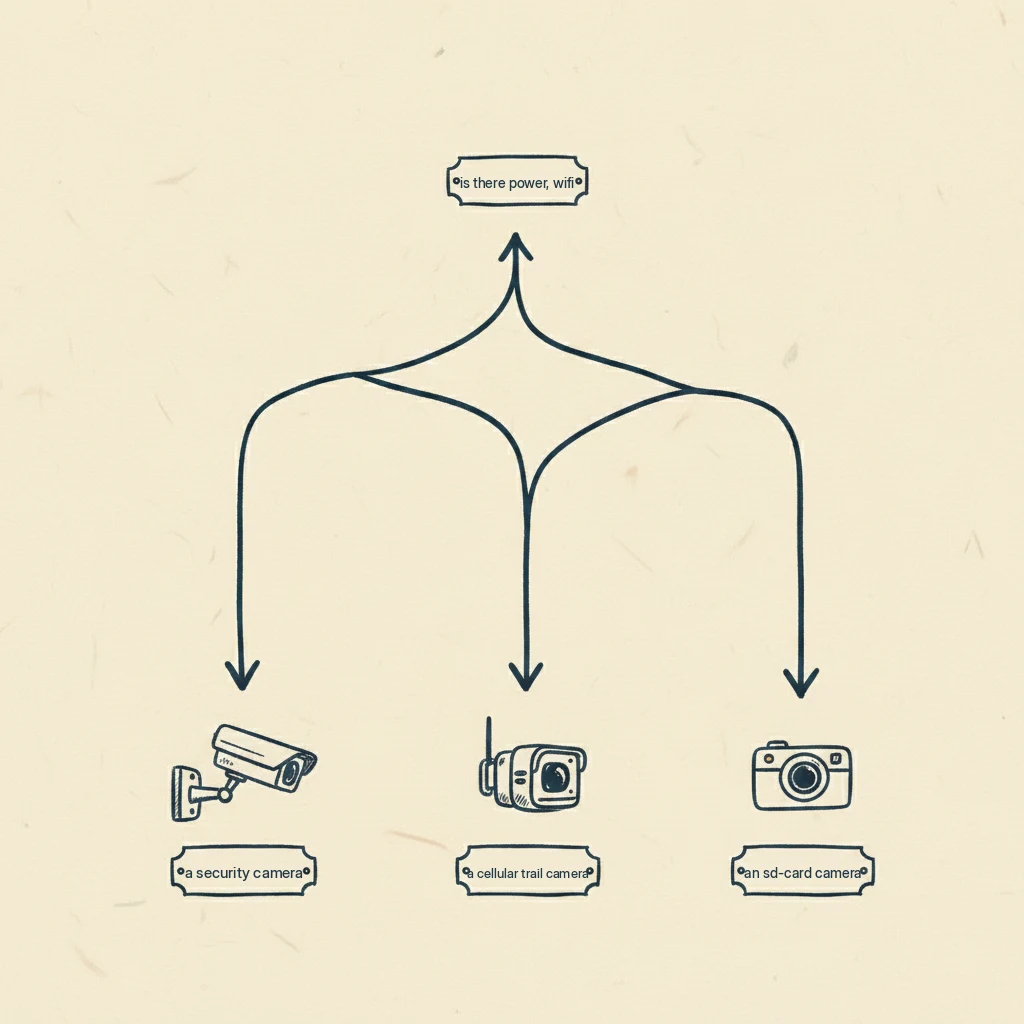
It comes down to one thing: infrastructure. A regular security camera, whether it’s wired or WiFi, is tethered. It needs to reach your network and, usually, a power outlet. That’s fine for the front porch. It’s useless for a gate a quarter mile down a dirt road, or a shed at the back of a rural lot, or a stretch of fence line with nothing out there but posts.
A cellular trail camera solves exactly that. Instead of your WiFi, it uses a cell signal, the same kind your phone uses, to send its pictures. That means it can sit anywhere a phone gets bars and mail you what it sees. It’s how people watch driveways and outbuildings and remote corners that no home system was ever going to cover, and it genuinely costs far less than wiring the place for real cameras.
So the honest rule is simple. Power and WiFi at the spot? Buy a security camera. Neither one? A cellular trail camera is a real answer, and a good one. This isn’t just me talking, by the way. Ask the vendors and they’ll tell you straight: if you need a camera for security, they recommend actual security cameras, because that’s what those are built for. The clearest tell of all is that Tactacam, which makes one of the best-known trail cameras, sells a completely separate security-camera line right beside it. The company that makes both draws the same line I’m drawing.
Here’s what’s actually happening with the price
This is the part nobody puts on the box, and it’s the whole reason this page exists.
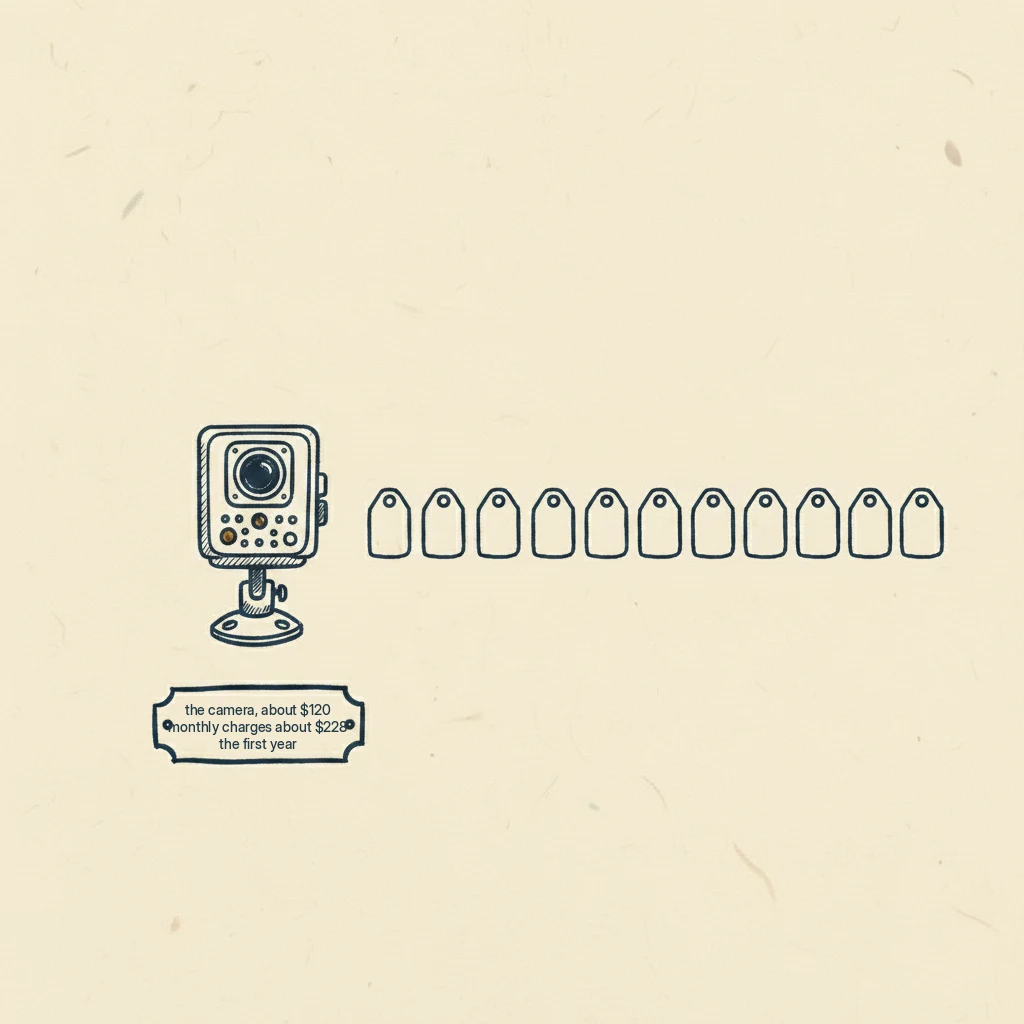
A cellular trail camera isn’t a one-time purchase. The camera is about $120. But because it sends pictures over a cell network, it needs a data plan, every month, and you pay it per camera. Moultrie, for instance, states it flatly: its cellular cameras require a paid subscription to work at all, with plans running about $9 a month for the standard tier and up from there. So that $120 Moultrie really costs $120 plus roughly $108 a year, forever, just to keep functioning. Buy the camera, and you’ve signed up for a bill.
That reframes everything. The camera is close to a loss-leader; the subscription is the actual product. And you can see that in the advertising too, if you know to look. Search-ad prices for this exact term run high, because an advertiser knows a buyer here’s worth a recurring monthly check, not a single sale.
How to spend the least
Once you understand that the plan is the cost, two cheaper paths open up, and I’d look hard at both before signing up for a monthly bill.
The free tier. SPYPOINT includes 100 free photos per month, per camera, on every one of its cellular cameras, and its Flex-M runs about $80. For a man watching one gate, 100 photos a month may be all you ever need. That’s a camera that mails you pictures for about eighty dollars and then costs you nothing, as long as you stay under the free limit. Almost nobody leads with the free option, so I will.
No cell plan at all. There’s an older, simpler kind of trail camera that saves its pictures to an SD card instead of mailing them. No subscription, no monthly anything. The catch is that you have to physically walk out and pull the card to see what it caught. For a gate a quarter mile away that’s a chore. For a driveway thirty yards from your back door, it’s nothing, and it might be the smartest money you spend. A well-regarded SD-card model like the Browning Recon Force Elite HP5 runs about $180, and then it’s free to run.
The limit that matters most for security
Now the hard truth, because your goal isn’t footage. Your goal is knowing who.
Trail cameras are built to grab quick snapshots and short clips, not the continuous high-definition stream a dedicated security camera records. The stills can be high-megapixel, but the video is usually modest, and the sources that sell these things say it plainly: the lower resolution makes it harder to identify faces or license plates in detail. Read that against what you actually want. A camera that reliably tells you “someone was here at 2am” but can’t tell you which someone, or which plate, hasn’t fully solved your problem. It might be enough to confirm a pattern, or catch a direction, or back up a report. Just go in knowing it’s a “something happened” tool more than a “here’s exactly who” tool, and don’t spend $228 of first-year camera-and-plan money expecting a courtroom-ready face.
There’s a second limit that comes free with the design. Because it only wakes on motion to save battery, it isn’t recording the whole time, so anything that happens outside that trigger window is simply missed. The same choice that lets it run for months off-grid is the choice that lets it miss things. That’s the trade, and it’s a fair one, but it’s the trade.
The three specs worth caring about
Forget the megapixel bragging. For watching a property, three numbers do the work.
Trigger speed is how fast the camera fires once it senses motion, and it decides how much of a person, or a vehicle, you actually capture before they’ve walked out of frame. The quicker ones sit around a third of a second. A car moving at speed is the hard case; a person on foot is easy.
Detection range is how far out it notices movement, usually 90 to 100 feet. Think of that as the width of the gate or driveway it can genuinely cover, and place it accordingly.
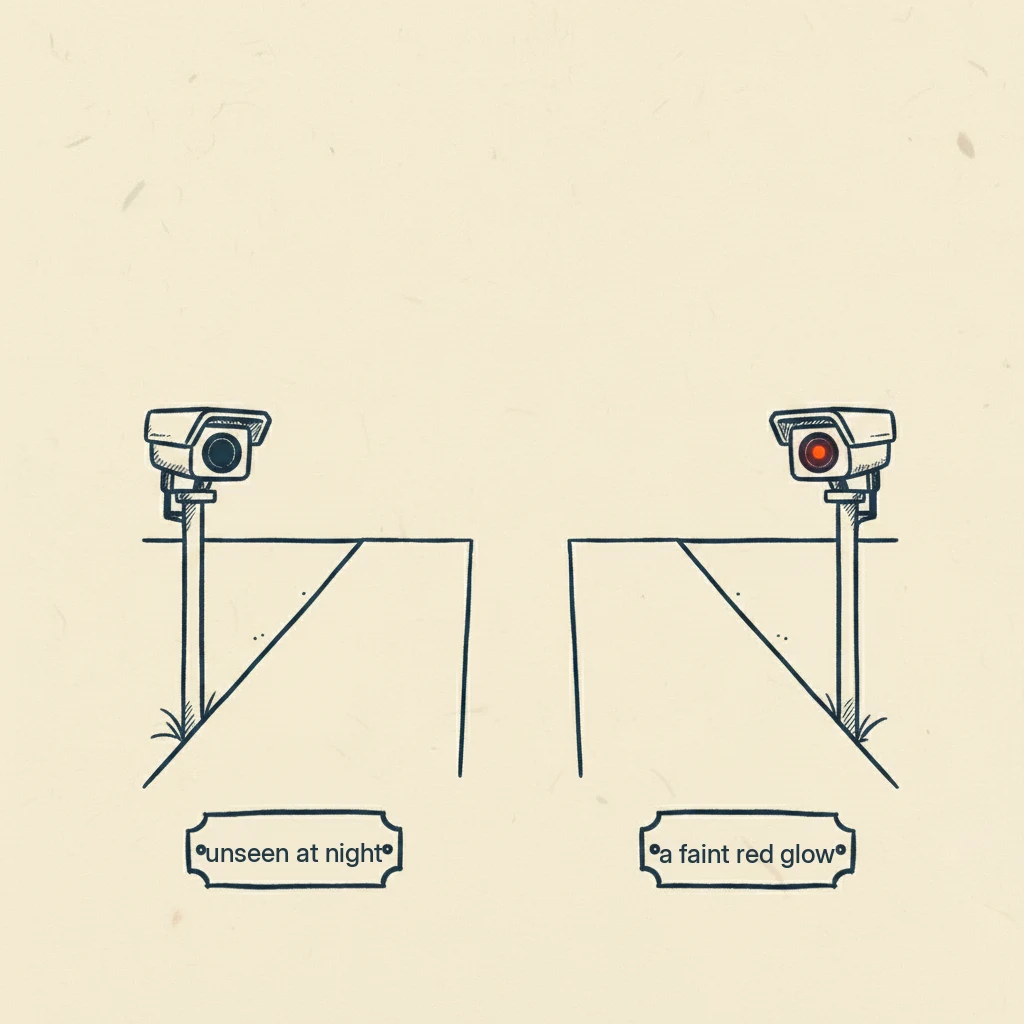
Flash type is the one the hunting reviews will steer you wrong on. There are two kinds of night flash. No-glow uses infrared that’s invisible to the eye, so the camera gives nothing away in the dark. Low-glow shows a faint red glow when it fires. For a hunter, a little glow that a deer ignores is no big deal, which is why a low-glow model often gets crowned “best overall.” But if part of the point is that whoever you’re watching doesn’t notice the camera, that faint red glow is the whole ballgame, and you want no-glow. This is exactly where the hunting shelf’s top pick can be the wrong pick for you, purely on that one spec. A 40-megapixel photo of the back of someone’s head is worth less than a plain clear shot from a camera they never saw. Fast trigger and the right flash beat big megapixels every time.
Two things to check before you mount it
A couple of practical notes that the sales pages skip.
First, a cellular camera only works where there’s a cell signal, and the remote spots that most need one are often exactly where signal is weakest. Before you buy, make sure your phone gets bars at the spot you plan to mount it. No signal, no pictures.
Second, and I’ll be brief and plain here because it’s not my place to give you legal advice: several of these cameras record sound as well as images, and the rules on recording, on audio, and on where a camera may point, especially near a property line or a neighbor’s land, vary from state to state. I’m not going to tell you what your rules are, because they depend on where you live and I’d be guessing. Just check your own state’s before you put one up, not after.
Questions people actually ask
Can I use a trail camera for home security?
You can, and in the right spot it works well. That spot is somewhere with no power and no WiFi, like a rural gate or an outbuilding. If the area has power and WiFi, a regular security camera will give you continuous recording and clearer images, and the trail-camera makers themselves recommend going that route.
How much does a trail camera really cost?
The camera is about $120, but the cellular ones need a monthly data plan, roughly $9 to $15, per camera, to send you pictures. That’s about $108 or more a year on top of the camera, every year. The cheapest paths are a camera with a free photo tier, or a plain SD-card camera with no plan at all.
Do all trail cameras need a subscription?
No. Only the cellular ones, which mail you pictures over a cell network, require a plan. SD-card cameras store everything locally with no monthly cost, but you have to walk out and collect the card yourself. Some cellular brands also include a small free photo allowance that may be enough for a single spot.
Will a trail camera capture a face or license plate?
Sometimes, but don’t count on courtroom clarity. The video resolution is lower than a dedicated security camera’s, so the sources that make these say it’s harder to make out faces and plates in detail. It’s better at telling you that something happened, and roughly when, than at telling you precisely who.
What I’d do with a spot to watch
So here’s where I’d land, plainly, for someone with a spot to watch. Start by asking whether that spot has power and WiFi. If it does, this isn’t your product, buy a real security camera and get clearer, always-on footage. If it doesn’t, a cellular trail camera is a genuine answer, and the smart move is to look first at a free photo tier or an SD-card model before you commit to a monthly bill. Choose no-glow so the camera stays quiet, put it where your phone gets a signal, and go in understanding it will tell you that something happened more reliably than it will tell you exactly who. That’s a real tool used for what it’s actually good at, and that’s usually the cheapest kind of peace of mind there is.
Ray Ostrander
Ray spent three decades explaining the sky to twelve-year-olds and their parents, and every January, hearing which Christmas telescopes ended up in the closet. He doesn't own a wall of gear and won't pretend to. He reads everything, tells you what owners agree on, and flags what's just his judgment. His goal is simple: no more January closets.