
What you'll actually see.
Welcome. This is the seeing counter: telescopes, binoculars, microscopes, and the rest of the small glass people buy to look at something more closely. I’m Ray. I taught earth science for thirty-one years, and I read everything on this shelf so you don’t have to learn a new language just to make one good purchase.
Because that’s who this is for. You don’t have the lingo, and you shouldn’t need it. You have a kid who wants to see Saturn, or a cruise coming up, or a drawer of coins, and you want the person behind the counter to just tell you the truth. That’s the whole site.

The two rooms
Two things that are true before you buy anything
If you remember nothing else, remember these two. They will save you from most of the bad boxes on the shelf.
The first: aperture beats magnification. Aperture is just the width of the end that gathers light. A wider opening lets in more light, and light is the whole game. More light beats more magnification every single time.
The second follows from the first, and it’s the one the marketing counts on you not knowing: the number on the box tends to get bigger as the glass gets worse. When you see “600X” shouting from the front of a cheap telescope, that’s not a feature. That’s the tell. The honest gear rarely brags about its magnification, because it doesn’t have to.
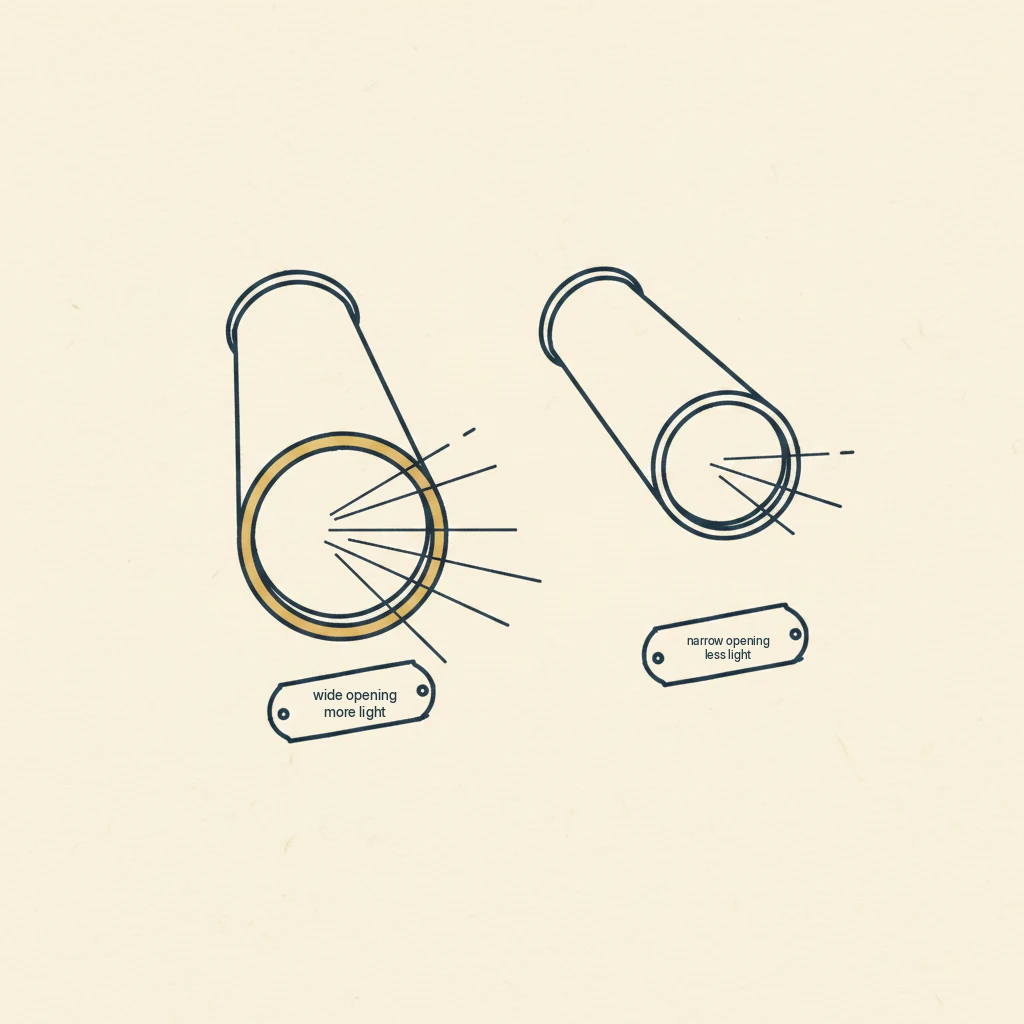
Now, what brought you here?
You’re buying a gift for a kid
Start with the age, not the price. A young child, a nine-year-old, and a teenager each want a different thing, and the wrong match is exactly how a gift ends up in the closet by February. Here’s the best telescope for a kid, matched to their age. If the child is more into bugs and pond water than planets, a kid’s microscope holds attention far longer than most people expect. And binoculars for a kid are the quiet winner nobody suggests: cheap enough to drop, useful the same afternoon, and never intimidating.
You’re buying for yourself
If you just want someone to tell you which one to get, start at the best telescope, plainly. It routes you to the right pick without the lecture. On the binocular side, the honest place to start is where the money stops working, which is the one page that keeps you from both overpaying and buying junk.
You’ve got a trip coming up
The trip decides the glass. An Alaska cruise wants something waterproof that holds steady on a moving deck. A safari wants a different balance, because a sighting lasts seconds and the light is often thin. And if the whole point is that it fits in the bag and actually comes out, that’s binoculars for travel.
You’ve got one specific job
Sometimes you aren’t browsing, you have a task. For a drawer of coins, the tool is smaller and cheaper than most people guess: here’s what you actually need for coins. For keeping an eye on a spot with no power and no WiFi, that’s what a trail camera is really for, and what it costs.
You just want to start tonight
If you aren’t ready to buy anything at all, good. That’s often the right move. Start stargazing tonight and buy nothing yet is the page I’d hand you first. Learn a few things with your own eyes, and you’ll buy far smarter when the time comes.
Two doors, if you’d rather just wander the aisle: the telescope corridor and the binoculars corridor. Both walk you through the decision in plain words, in the order that actually matters.
No brand pays for a word on this site.
Nothing here was looked through by anyone on staff, and every page says so plainly.
If you buy through a link here, the site earns a little. It's never why anything gets picked.