
The Best Kids Telescope, Matched to Their Age
Match the scope to the kid: a tabletop Dobsonian for ages 5 to 8 (about $50 to $75), a 70mm refractor for 9 to 12 (about $80 to $120). Ignore the box magnification and skip the toy-aisle scopes.
 Ray Ostrander · Updated July 24, 2026 · how I decide
If you buy through a link here, the site earns a little. It's never why anything gets picked.
Match the scope to the kid. Ages 5 to 8 do best with a little tabletop Dobsonian, about $50 to $75. Ages 9 to 12 want a 70mm refractor on a steady mount, about $80 to $120. Teens can handle an 80mm scope, about $120 to $180. Ignore the magnification number on the box, and skip the under-$30 toy-aisle scopes entirely.
What's on this page
Start with the age, not the specs
The single most useful thing I learned in thirty-one years of hallway conversations is that the right telescope for a kid is the one that matches the kid, not the one with the best numbers. Here’s how it sorts out.
For ages 5 to 8, buy a tabletop Dobsonian, which is a simple scope that sits on a small base and swings by hand. There are no tripod legs to knock over and almost nothing to set up. The Celestron FirstScope 76, a 76mm Dobsonian with a tiny footprint, is the standard pick here.
For ages 9 to 12, step up to a 70mm refractor, the classic straight-tube telescope, on a stable mount. This is where a kid starts seeing Saturn’s rings, Jupiter’s moons, and the craters on the moon in sharp detail. For teens, an 80mm refractor or a small reflector becomes a genuine instrument they can grow into for years.
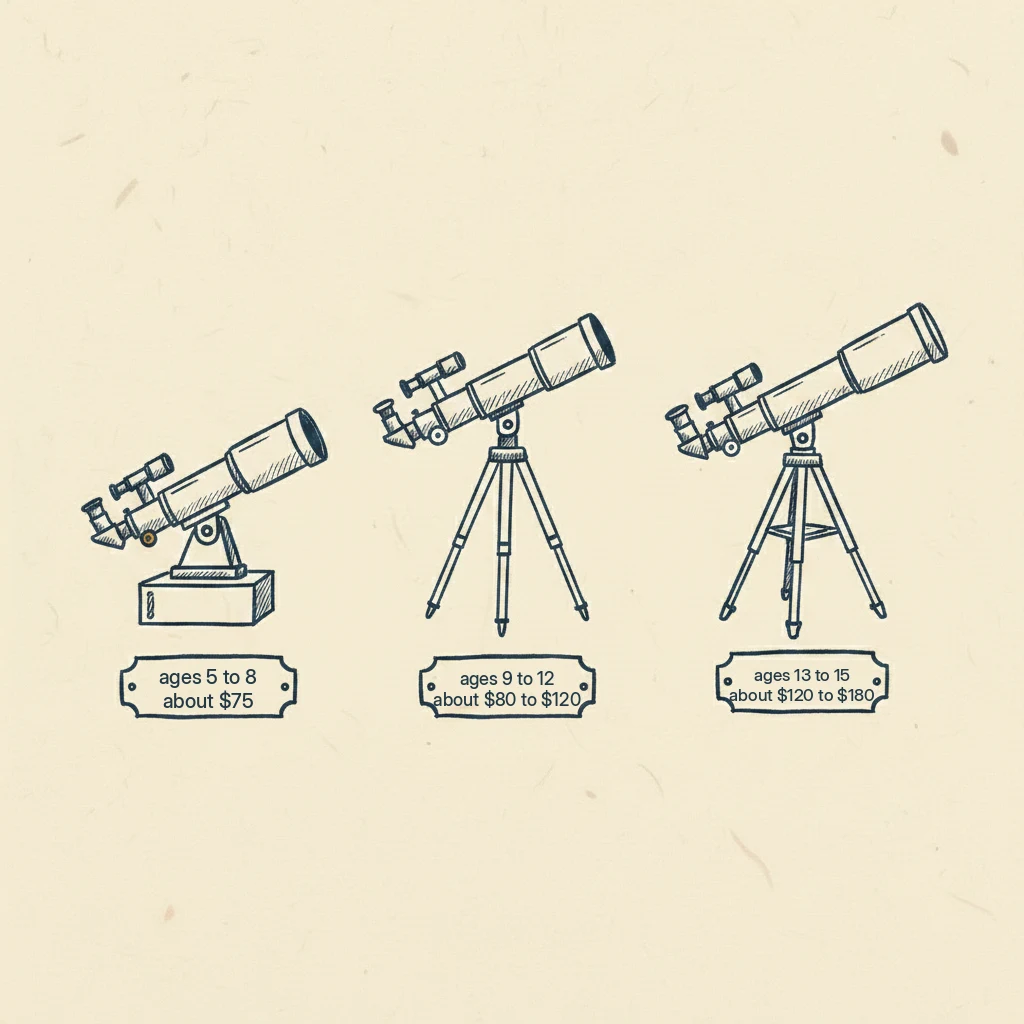
There’s a rule underneath all of this, and it decides more nights than optics do: a telescope that takes twenty minutes to set up will never come out on a school night. If the kid can’t carry it outside and point it themselves, it quietly becomes the parent’s telescope, then nobody’s. Aperture, which is just the width of the light-gathering end, is the most important number on the tube. The magnification on the box is the least.
What your kid will actually see
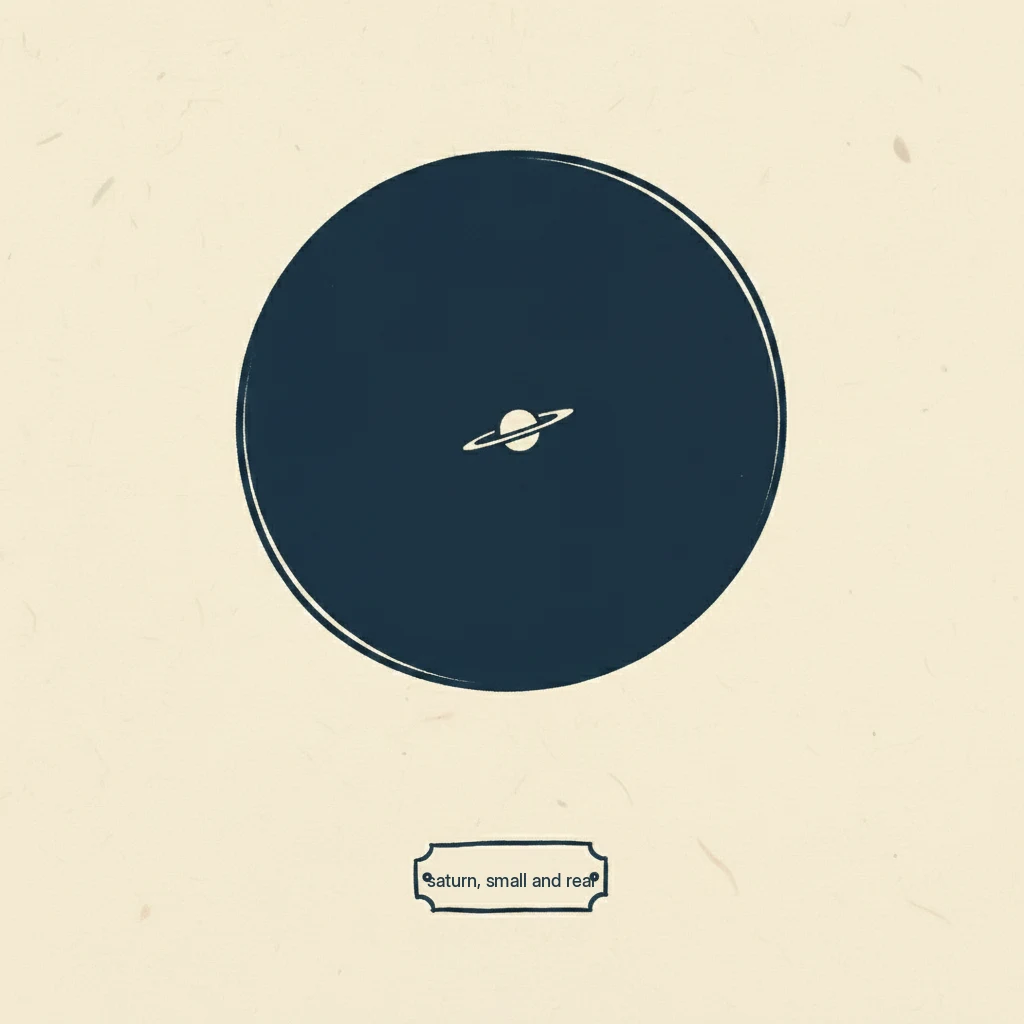
Say this out loud before Christmas morning, because it protects the whole gift. The planets are small through any first telescope. Saturn is a bright bead with a thin, sharp ring around it. Jupiter is a little striped disc with a few moons lined up beside it. They’re not poster-sized, and owners will tell you the discs look really small in the eyepiece.
Here’s the thing worth handing a kid, though. That little ring is real. The light in their eye left Saturn about eighty minutes earlier and crossed the whole distance just to end its trip with them. No child who understands that’s disappointed it’s small. Small and real beats big and fake every single time.
Let me talk you out of overthinking this
A lot of parents read a forum thread, get scared, and conclude a real telescope is the wrong gift. It usually isn’t. Owners say a modest starter delivers plenty: one described giving a kid a budget scope and still getting great views of Jupiter, and added, don’t be discouraged by what you read online. Another put it more memorably, saying he handed a child a cheap little scope, accepted that the kid would take it apart, and that this is exactly how he became a physics professor.
Curiosity doesn’t owe you a lifetime commitment. If a kid wants a telescope this year because of an eclipse or a school unit, that’s real interest, and it deserves real gear now, not a lecture about whether they’ll still care in five years. Buy at the moment the interest spikes, and buy cheap enough that losing it wouldn’t hurt. The best time is the week they ask.
The toy-aisle trap
Here’s where the money gets wasted. Any scope in the toy aisle shouting 300x, 500x, or 700x is using cheap optics behind a big number, and experts call these the worst telescopes you can buy. The number is empty, because a small scope’s useful magnification is capped by its width no matter what the box claims. A 60mm scope tops out honestly around 120 to 140 times.
Skip the toy telescopes sold for under $30, too. The gap between a $30 toy and a $60 real instrument like the FirstScope is enormous, and the kid feels it on the first night. Two more quick tells: a focuser that’s entirely plastic will break, and a non-standard eyepiece barrel means you can never upgrade it. You want a metal focuser and a standard 1.25-inch eyepiece.
The shelf, by age
Here’s the researched shelf, cheapest first, in rounded prices as I write this. Nobody here has looked through these, which is said plainly on the About page.
- Celestron FirstScope 76mm tabletop Dobsonian, about $75 at the anchor shop, sometimes $50 to $70 elsewhere. Ages 5 to 8. About what a couple of video games cost, and far more durable.
- Gskyer 70mm AZ refractor, about $80 to $120. Ages 9 to 12. Reviewers call it honest optics in a portable kit, and it shows the rings and moons cleanly.
- Celestron Moon Mission 100mm tabletop Dobsonian, about $180. A little more aperture, still nothing to knock over.
- Explore Scientific FirstLight 80mm refractor, about $120 to $180. Ages 13 to 15, a real instrument they grow into. (Explore Scientific is a current brand, not the discontinued Orion you’ll see on old lists.)
- Celestron AstroMaster 70AZ, about $150 to $200. A steady alt-az scope owners specifically praised as a kid gift, with great views of Jupiter.
My judgment, said plainly: for most kids the right first telescope is a sub-$100 tabletop Dobsonian or 70mm refractor the child can carry and set up alone, matched to their age, with the box magnification ignored.
Questions people actually ask
What’s the best telescope for a 5 year old?
A tabletop Dobsonian, about $50 to $75. There are no tripod legs to tip over and almost nothing to assemble, so a small child can aim it themselves. Point it at the moon first, tell them the planets will look small, and let the craters do the rest. That view holds a five-year-old’s attention better than any toy with a big number.
Is a telescope too much for a 3 or 4 year old?
Often, yes, and that’s fine to admit. At that age the setup and the focusing usually frustrate more than they delight. A star projector or a simple pair of low-power binoculars fits a toddler much better, and keeps the wonder without the friction. See star projector for kids for the pre-telescope gift.
What telescope should I get a 9 year old?
A 70mm refractor on a steady mount, about $80 to $120. This is the sweet spot where a kid can find and hold Saturn’s rings, Jupiter’s moons, and lunar craters without help. Look for a metal focuser and a standard 1.25-inch eyepiece so it survives the year and can be upgraded later.
Is a kids telescope just a toy?
The under-$30 toy-shop scopes basically are, and they break or disappoint fast. A real instrument in the $50 to $120 range is a different thing entirely: honest optics, a usable mount, and views of the moon and planets that a toy can’t touch. The price gap is small and the experience gap is enormous.
Will my kid actually use it?
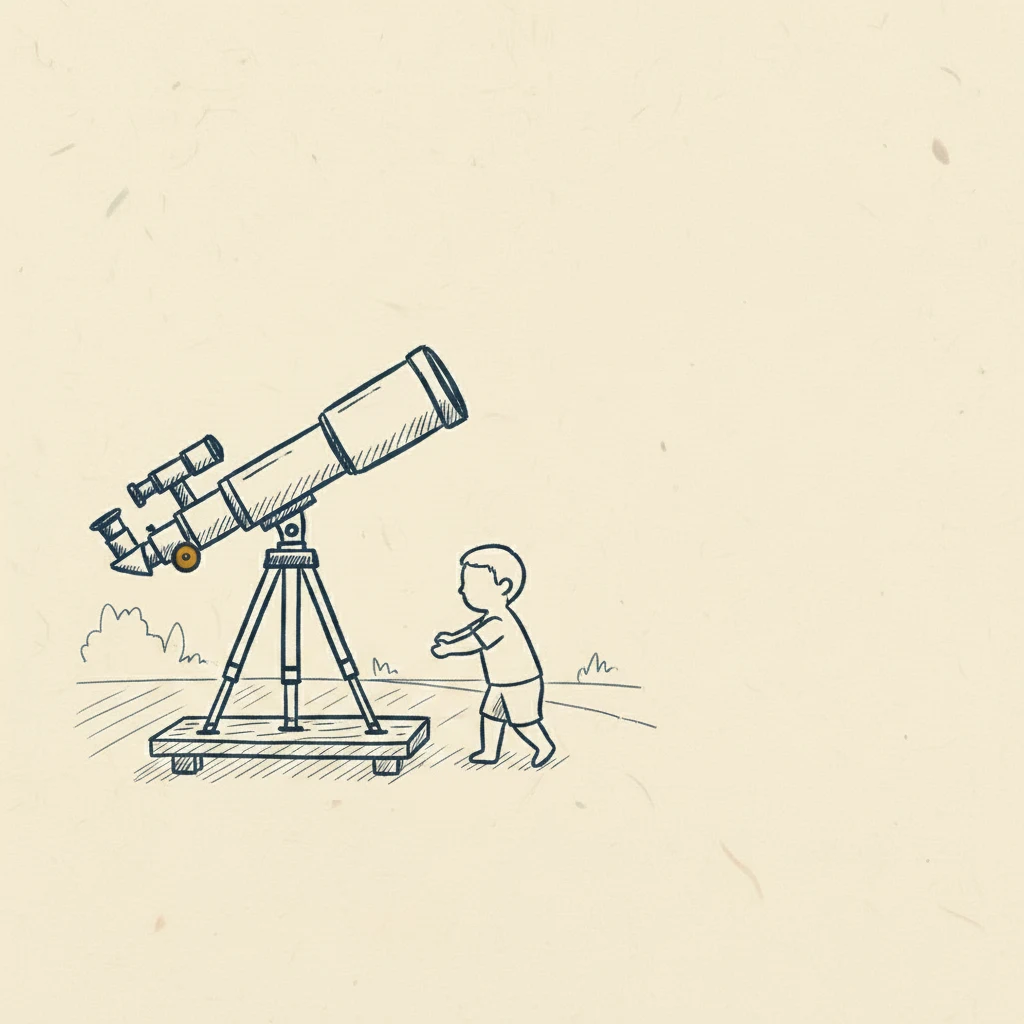
That’s the right question, and the answer is mostly about friction, not optics. A scope the kid can carry outside and set up alone gets used. One that needs twenty minutes and a parent’s help gets used twice. Buy for that, and you’ve bought the nights, not just the box.
What I’d tell a parent in the hallway
Buy the age, not the specs. Get a tabletop Dobsonian or a 70mm refractor the kid can carry outside alone, keep it under a hundred dollars, and warn them ahead of time that Saturn will be small. That’s the gift that stays out of the closet.
A few things you’re probably also wondering:
- What do the planets actually look like once it’s set up? See telescope to see planets.
- Worried about wasting money on a cheap one? See best cheap telescope.
- Kid too young for a telescope? See star projector for kids.
- Wondering if binoculars are the smarter first gift? See stargazing for beginners.
Ray Ostrander
Ray spent three decades explaining the sky to twelve-year-olds and their parents, and every January, hearing which Christmas telescopes ended up in the closet. He doesn't own a wall of gear and won't pretend to. He reads everything, tells you what owners agree on, and flags what's just his judgment. His goal is simple: no more January closets.