
The Telescope to See Planets: What You'll Actually See
A small telescope really does show Saturn's rings and Jupiter's moons. They look small and bright, not poster-sized. Buy for aperture, not the magnification number on the box.
 Ray Ostrander · Updated July 24, 2026 · how I decide
If you buy through a link here, the site earns a little. It's never why anything gets picked.
Yes, a small telescope shows you Saturn’s rings and Jupiter’s moons. Real ones, tonight, from an ordinary backyard. The catch is scale: the planets look small and bright, not poster-sized. Buy for aperture, which is just the width of the light-gathering end, and ignore the big magnification number on the box. That number is where most families go wrong.
What's on this page
What the planets really look like
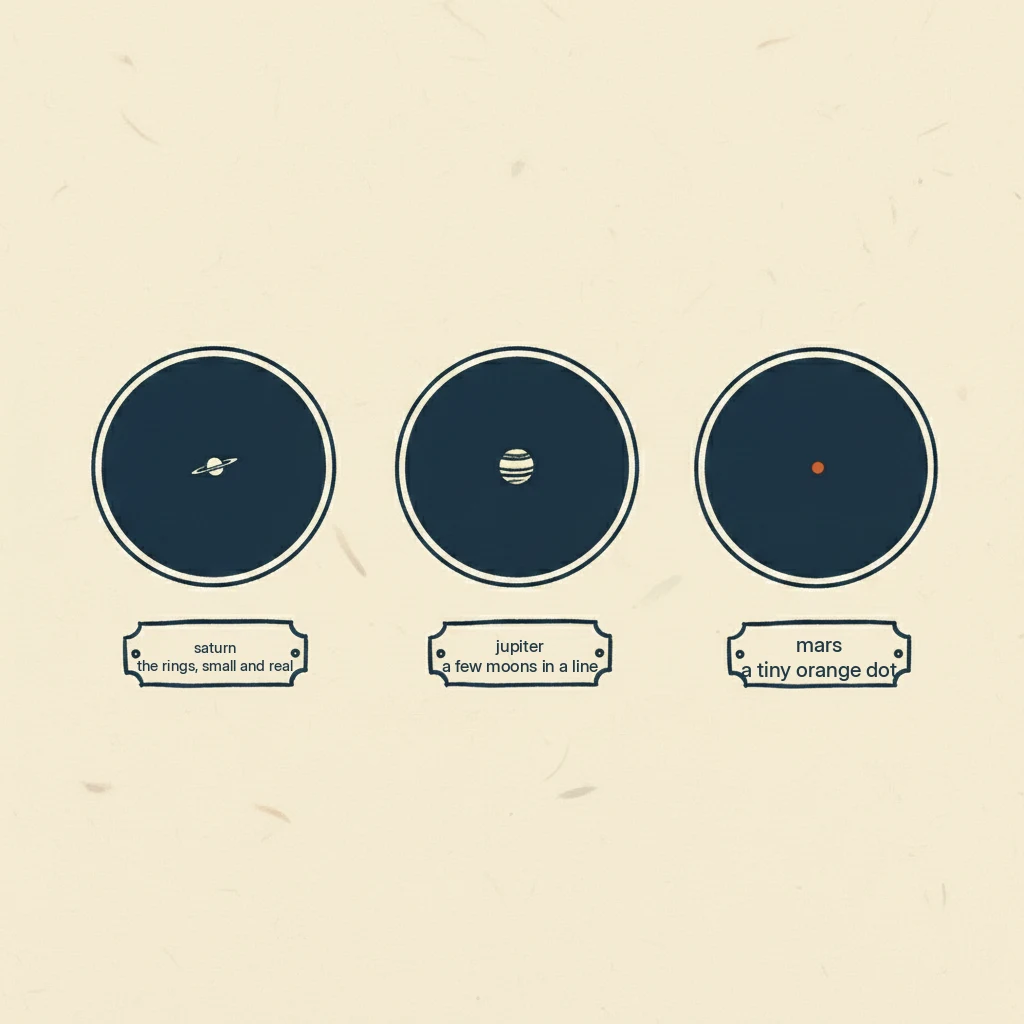
Let me start with the truth the buying guides skip. Point a first telescope at Jupiter and you see a small, slightly flattened disc with a couple of dark cloud bands across it, and often a few of its moons strung out in a line beside it. On a good night you might catch the Great Red Spot. Even in steady binoculars you can make out the disc and a moon or two, which tells you how little gear this really takes.
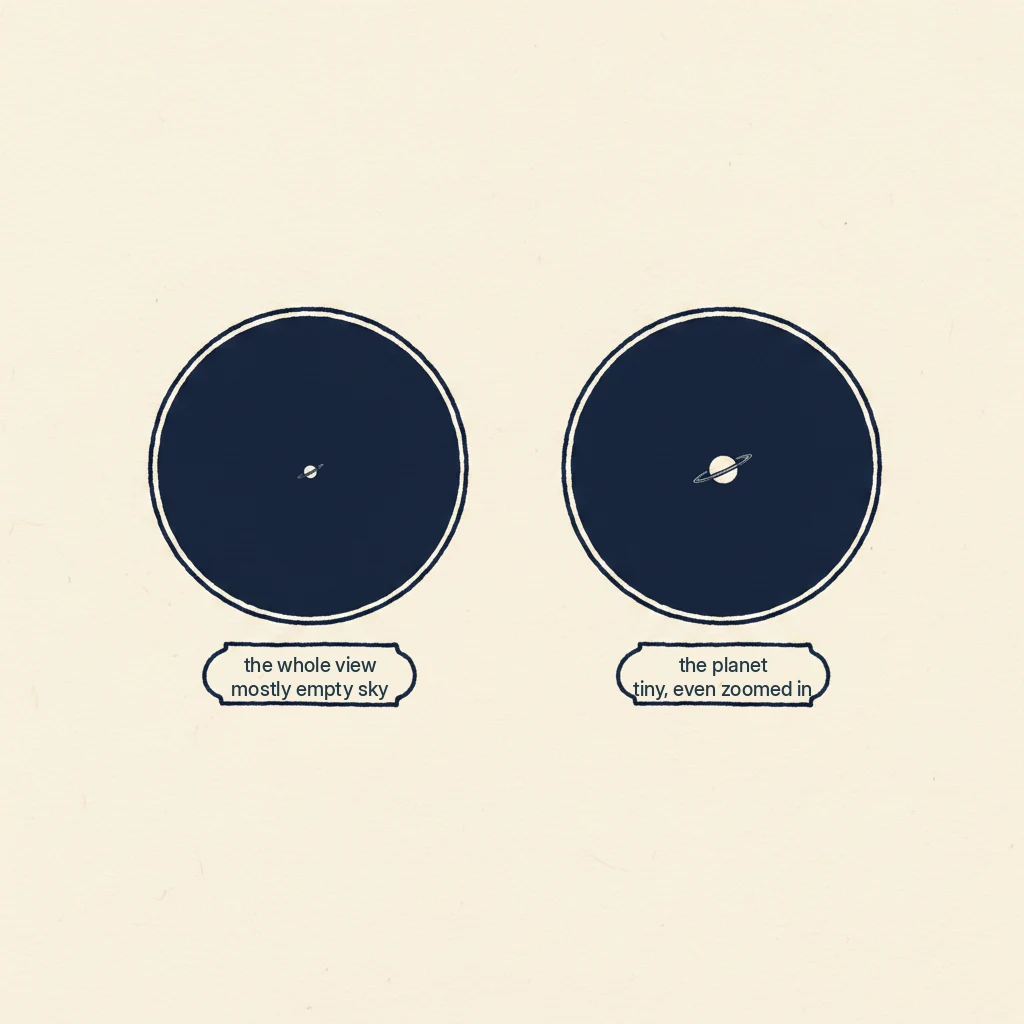
Then there’s Saturn, and Saturn is the one that gets people. The rings show up plainly at about twenty-five to thirty times magnification, small and sharp and unmistakably there. And the light doing it’s real Saturn light: a photon that left the planet about eighty minutes before it reached you, finishing its whole trip in your eye, in your backyard. The planet is a bright bead. The rings are a thin bright line wrapped around it. Nobody who sees it for the first time is disappointed that it’s small.
Mars is smaller and shyer. Most of the time it’s a tiny orange dot, and that’s honest. But every couple of years Mars and Earth swing close together, and in those windows, at fifty to a hundred times magnification, you can pick out dark surface markings and a white polar cap. If a kid’s interest is riding on Mars, check when the next close pass is before you buy.
Here’s the whole planet shelf in one look, so you can set expectations before you spend a dime:
| Planet | What a first scope really shows | About how much magnification |
|---|---|---|
| Jupiter | The disc, a couple of dark cloud bands, and up to four moons in a line | Around 30x to start |
| Saturn | The rings, plainly, and its big moon Titan | About 25x to 30x for the rings |
| Mars | A small orange dot; near a close pass, dark markings and a polar cap | 50x to 100x, and good years only |
| Venus | Phases, like a tiny moon, best just after sunset | Low power is enough |
| Mercury | A tiny brownish disc, and honestly that’s about it | Small scope, low power |
| Uranus and Neptune | A small, featureless disc, if you know where to look | 50x for Uranus, 150x for Neptune |
A telescope to see planets and galaxies?
This is the sentence that saves the most Christmases, so read it slowly. The same telescope will show you the moon and the planets beautifully. It won’t show you galaxies and nebulae the way the box does. Those glowing, colorful pictures are stacked long exposures, built up over hours by a camera and a computer. Your eye isn’t a camera.
To your eye, a galaxy is a faint gray smudge. Real, quietly amazing, and still a smudge. Owners say this over and over: the photos of the moon and planets are fair, the deep-sky photos are fiction. If you truly want those colorful galaxy shots, that’s a different hobby with a different bill. The mount alone runs north of thirteen hundred dollars, and that’s before you buy the camera.
The number on the box that ruins it
Walk down the telescope aisle and you’ll see it: a box shouting 600X MAGNIFICATION over a photo of Saturn the size of a dinner plate. That box is what the hobby quietly calls a hobby killer, and the name is earned. Here’s what’s actually happening. Magnification has a ceiling, and aperture, that light-gathering width, sets it. Nothing on the price tag changes the physics.
About twice the aperture in millimeters is the honest top end, and no sticker price moves it. That sixty-millimeter department-store tube runs out of usable power near a hundred and twenty times. Ask it for six hundred and every extra step of magnification only thins the same light further, so the picture fades and blurs at once. What lands in your eye at 600x is a swollen, muddy gray version of the very thing you came outside to see.
And even when the optics are honest, the tripod usually isn’t. A wobbly mount is the single most common reason a telescope ends up in a closet by January. If the whole rig shivers every time you touch the focus knob, you’ll never hold a planet still long enough to enjoy it. The tripod is the product. A steady, boring mount beats fancy glass on a card table every single time.
So what’s a good cheap telescope to see planets?
You don’t need much, and you shouldn’t spend much on a first one. Here’s the shelf I’d point a hallway parent at, cheapest first, all researched rather than tested. Nobody here pretends to own a garage full of these, and you’ll find that said plainly on the About page.
The spec sheets, in rounded numbers as I write this:
- Celestron FirstScope Signature Moon, about $75. A little tabletop scope, small and forgiving, about what a nice dinner out costs.
- Sky-Watcher Heritage 130P, about $230 to $280 these days. A collapsible tube that stores in a backpack, with a parabolic mirror one reviewer called good optical quality.
- Celestron AstroMaster 70AZ, about $150 to $200 on the street. No collimation ever, five-minute setup on a pre-built tripod. A scope like this provides genuinely great viewing for a first buy.
- Celestron StarSense Explorer LT 114AZ, about $260. It uses your phone to point you at objects, which for a beginner is the difference between finding Saturn and giving up.
- Sky-Watcher Skymax 102, about $300, though the sticker sometimes says more. A long, planet-leaning design if the planets are the whole point.
Which one is right depends on who it’s for and what it has to survive. I sort that out on the cheap-telescope page and the kids’ telescope page, because an eight-year-old and a curious adult need different things from the same hundred dollars.
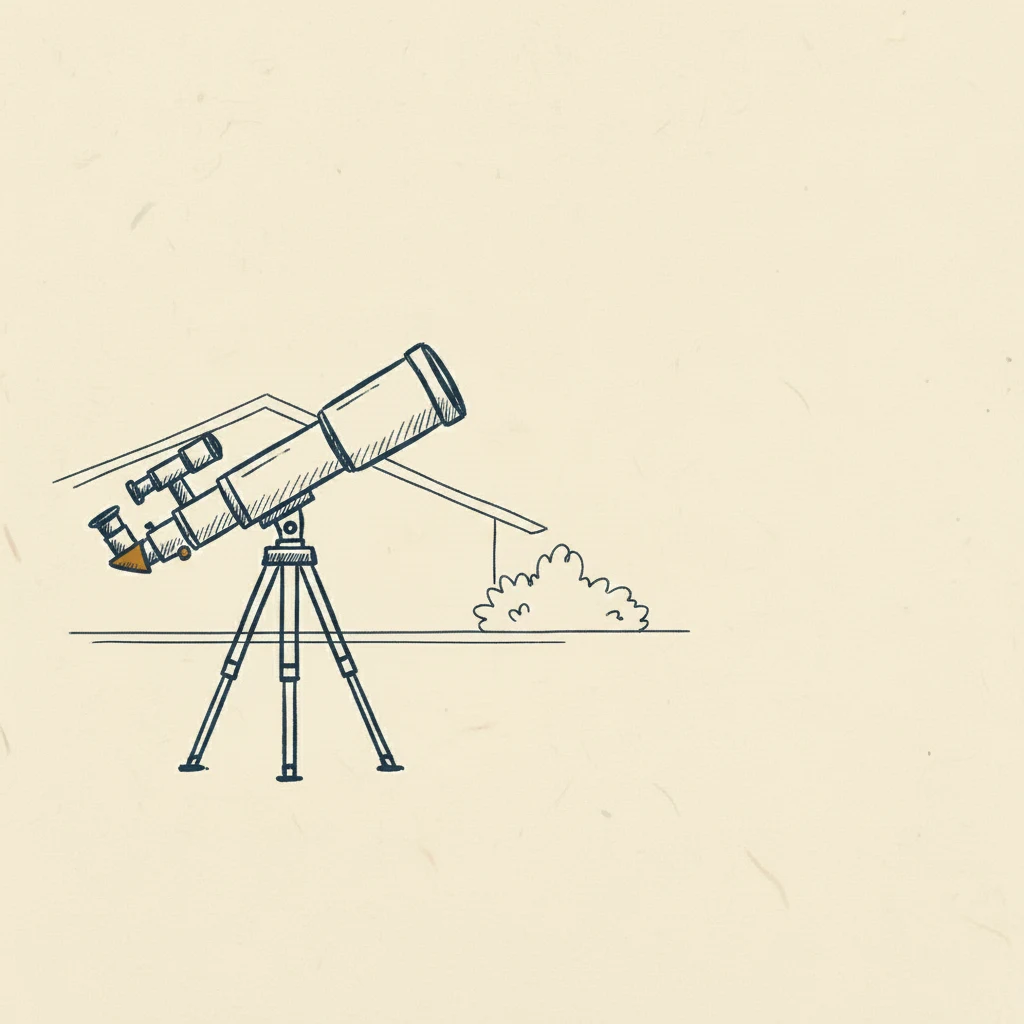
My judgment, said plainly: a scope that shows you Saturn’s rings and Jupiter’s moons is a modest one, bought for aperture and a steady mount, not for the number on the box. The small, real disc is the whole point, not a compromise.
Questions people actually ask
What’s the best cheap telescope to see planets?
Pick aperture and a steady tripod over any magnification claim. The shelf above starts around $75 and tops out near $300, and any of them will show you the planets. Which one fits your situation is the whole question on the cheap-telescope page, so start there before you buy.
Can one telescope see both planets and galaxies?
The same scope can point at both, yes. But a galaxy shows up as a faint gray smudge to your eye, not the colorful swirl in the photos. The moon and the planets are where a first telescope shines, so buy it for those and treat any galaxy you catch as a quiet bonus.
Can I see the planets from the city?
Yes. The moon and planets shrug off light pollution almost entirely. It’s the faint galaxies and nebulae that need a dark drive out of town. From a city backyard, Saturn’s rings and Jupiter’s moons look the same as they do anywhere, so a bright sky is no reason to skip a first scope.
How much does a telescope to see planets cost?
A genuinely good first planet scope runs about $75 to $300. Below that you’re usually paying for the 600x box, not the view. Above that you’re buying capability a beginner won’t reach for yet. Buy at the moment the interest spikes, and buy cheap enough that losing it wouldn’t hurt.
Is a beginner telescope good enough for planets?
Easily. The planets are the most reliable targets in the sky. A modest beginner scope shows Jupiter’s cloud bands and Saturn’s rings on the first clear night, no expertise required. The gear that struggles is the gear aimed at faint galaxies, and that isn’t what you’re here for.
What I’d tell a parent in the hallway
Buy a small scope for its aperture and its steady tripod, spend somewhere between seventy-five and three hundred dollars, and tell the kid before the first look that Saturn will be small. They’ll love it anyway. They always do.
A few things you’re probably also wondering:
- Which cheap telescope won’t die by January? See best cheap telescope.
- Is one of these right for a specific kid? See best kids telescope.
- Is your child maybe too young for a telescope at all? See star projector for kids.
- Want to start tonight with no gear at all? See stargazing for beginners.
Ray Ostrander
Ray spent three decades explaining the sky to twelve-year-olds and their parents, and every January, hearing which Christmas telescopes ended up in the closet. He doesn't own a wall of gear and won't pretend to. He reads everything, tells you what owners agree on, and flags what's just his judgment. His goal is simple: no more January closets.