
The Best Star Projector for Kids: Two Very Different Things
Star projectors come in two kinds: accurate ones that show the real night sky (learning tools, pricier) and ambient ones that throw colored light (mood lights, cheap). Decide which you want before you buy.
 Ray Ostrander · Updated July 24, 2026 · how I decide
If you buy through a link here, the site earns a little. It's never why anything gets picked.
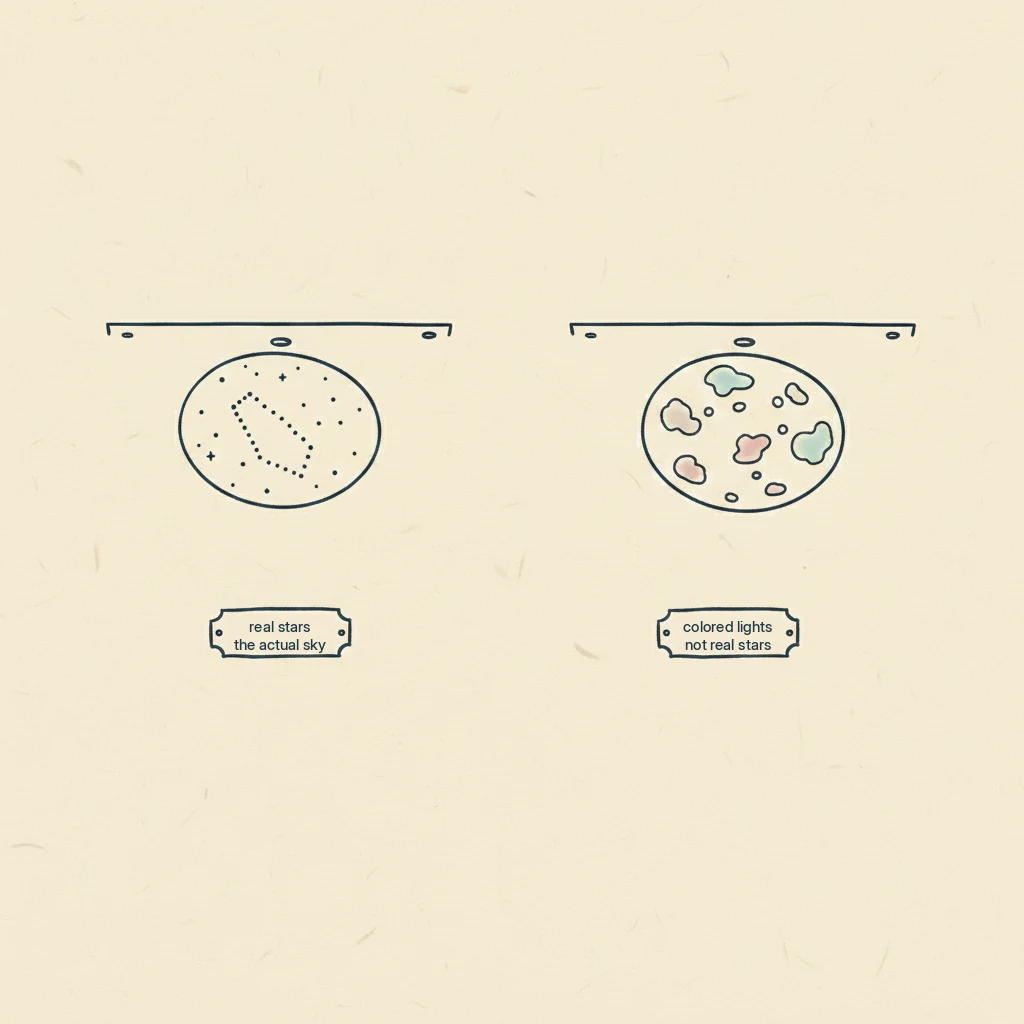
Star projectors come in two kinds, and the whole decision is knowing which one you want. Accurate ones project the real night sky, actual stars in their real positions, and they’re learning tools that cost more. Ambient ones throw colored light and drifting nebula blobs across the ceiling; they’re mood lights, and they’re cheap. Decide which you’re buying before you spend a dime.
What's on this page
Two products wearing the same name
Look closely at that shelf. The listicles rank a $15 color-blob night light right next to a $250 planetarium as if they’re the same thing, and they aren’t. One is a bedtime mood light. The other is a small planetarium that shows real constellations. A parent who wanted one and bought the other is disappointed either way.
So sort it out first. A “planetarium” projects pinpoint stars in their true positions, sometimes even matched to the date and time. A “galaxy” or “aurora” projector throws soft colored light and swirls, pretty on a ceiling but not a picture of anything real. Neither is wrong. Buying the mood light for a curious eight-year-old who wanted the real sky is the mistake, and so is paying planetarium money for a toddler who just wants colors to fall asleep to.
The safety part nobody prints
This one matters more than the star count, so read it before you buy anything for a small child. A lot of the cheap projectors marketed as kids’ toys don’t use soft LED light at all. They use lasers. One parent bought a popular astronaut projector, saw the website said LED, and on close inspection found it was throwing bright green laser dots. As they put it, real stars aren’t green.
Owners of these run them as a parent-operated device, not a toy the kid holds. The common practice: it lives on a high shelf out of reach, a grown-up turns it on, and it’s aimed to bounce off the ceiling so the beam never hits anyone at eye level. One dad summed it up: he loves it, but I run it, it’s a top-shelf toy, literally. If you’re buying for a young kid, the plain LED ambient projectors and the real optical planetariums are the safer picks, and the laser gadgets are the ones to supervise.
The accurate shelf (real stars)
If you want the real sky, this is the priceable, branded side of the category. Rounded prices as I write this, all researched rather than owned, which the About page says plainly.
- Sega Homestar Flux, about $259. The top of the accurate class, praised for the most scientifically accurate images.
- Sega Homestar Original Black, about $150, advertised at 60,000 stars. Reviewers call it slightly expensive, which is true only next to the $30 mood lights. The same line runs cheaper: the Classic around $117 and the Mataki around $110.
- Dark Skys DS-FX, about $115. A solid accurate-class option a step below the Sega line.
One caution: some older buying guides still name a National Geographic Astro Planetarium as the accuracy pick, but it’s hard to actually find in stock now, so don’t build your plan around it.
The mood-light shelf (colors)
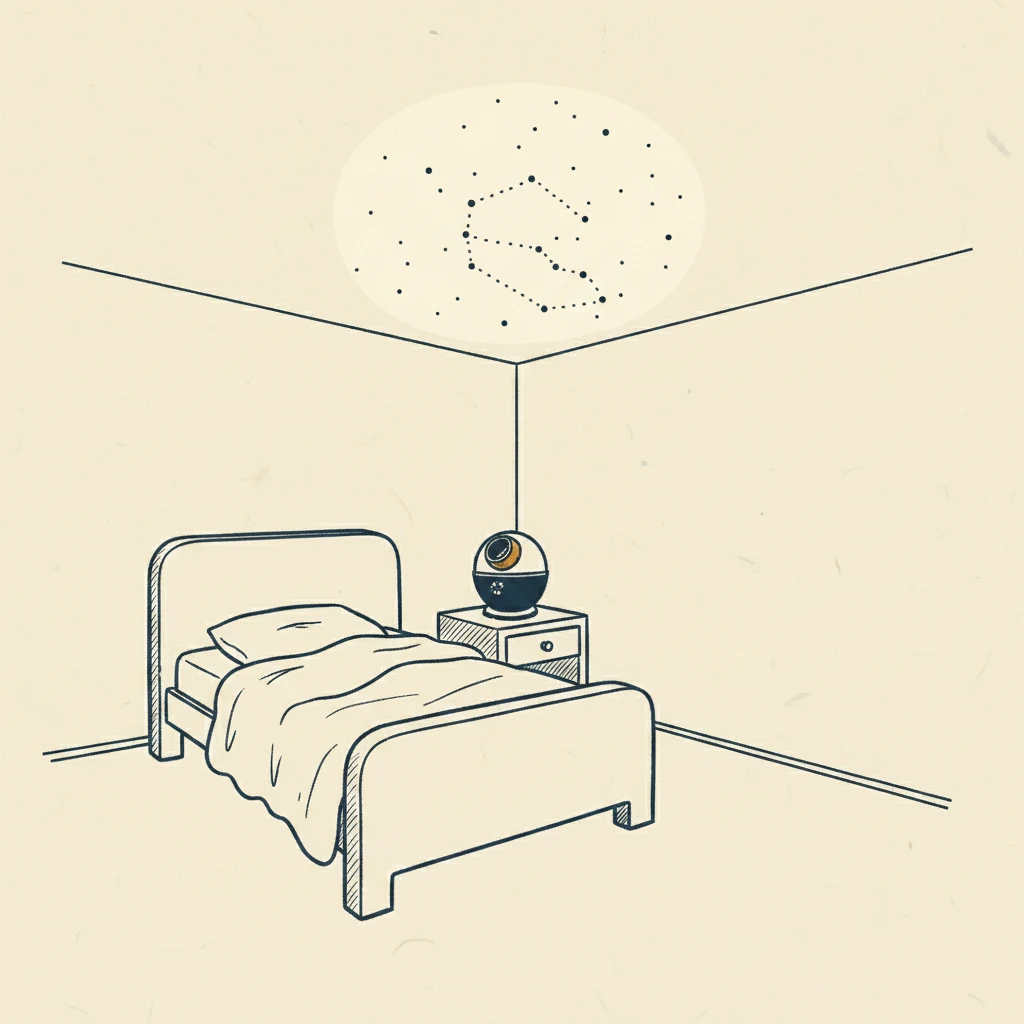
If what you really want is a calming, pretty ceiling for bedtime, you don’t need to spend planetarium money. This class is cheap, and the model names churn so fast that pinning one is pointless; buy the current well-reviewed version of the shape you like.
- The astronaut-style projector runs about $30, and clones sit anywhere from $10 to $35. About what a couple of takeout dinners cost.
- The “13-in-1 galaxy” commodity projectors run roughly $27 to $50.
- Fancier ambient models climb: a Govee nebula around $75, a POCOCO around $100.
- For a middle ground, kid-STEM planetariums like a Brainstorm Deep Space (about $20), a Thames and Kosmos (about $33), or a Smithsonian model (about $60) mix a little real learning with the light show.
A word on the marketing. You’ll see huge star-count claims, four million stars, sixty thousand stars, printed right on the box. Treat those as advertising, not a spec you can check. The number that matters is which of the two kinds you’re holding.
My judgment, said plainly: decide first whether you want a real-sky learning planetarium or a bedroom mood light. They’re different products at different prices, and the blended lists are what get parents the wrong one.
Questions people actually ask
What’s the best star projector for a kid’s room?
Depends on the job. For a calming bedtime ceiling, a plain LED ambient projector in the $30 range does it and does it well. For a kid who wants to learn the real constellations, spend up for an accurate planetarium like the Sega Homestar line. Buying the mood light when you wanted the real sky is the only real mistake here.
Are star projectors safe for kids?
Mostly, with one catch: many cheap ones use lasers, not soft LED light. Parents who own them keep them on a high shelf, run them themselves, and aim the beam to bounce off the ceiling. For a young child, favor the plain LED ambient models or a real optical planetarium, and treat any laser gadget as a supervised, parent-operated device.
Is a star projector with music any good?
Those are squarely the ambient, mood-light kind, built for sleep and calm rather than real stargazing. For a bedtime routine they’re lovely. Just don’t expect the ceiling to match the actual night sky, because that isn’t what they do. If real stars are the goal, look at the accurate planetarium shelf instead.
Should I buy a star projector or a telescope?
For a toddler or a young child, the projector is the better first step: no setup, no focusing, just wonder on the ceiling. When that interest sticks and they start asking what’s really up there, that’s the moment to step up to a real scope. See best kids telescope for the next gift.
What I’d tell a parent in the hallway
Figure out which kind you want first. If it’s bedtime calm, buy the cheap LED mood light and enjoy it. If it’s a kid who wants the real sky, spend up for an accurate planetarium, keep any laser model up high, and you’ve bought a real on-ramp to the stars.
A few things you’re probably also wondering:
- Ready to step up from the ceiling to a real telescope? See best kids telescope.
- Curious what the planets actually look like through a scope? See telescope to see planets.
- Want an easy way to start under the real sky tonight? See stargazing for beginners.
Ray Ostrander
Ray spent three decades explaining the sky to twelve-year-olds and their parents, and every January, hearing which Christmas telescopes ended up in the closet. He doesn't own a wall of gear and won't pretend to. He reads everything, tells you what owners agree on, and flags what's just his judgment. His goal is simple: no more January closets.