
The Best Cheap Telescope: An Honest Answer
Below about $100 you're mostly buying frustration. The real starting point is $150 to $350, spent on a steady mount, not a big magnification number. Walk past any box shouting 600X.
 Ray Ostrander · Updated July 24, 2026 · how I decide
If you buy through a link here, the site earns a little. It's never why anything gets picked.
The honest answer: below about $100 you’re mostly buying frustration, and the real starting point is $150 to $350. Spend it on a steady mount, not a big aperture number, because a wobbly tripod ruins even a good tube. And walk past any box shouting 600X. That number is the surest sign of a scope that dies in a closet by January.
What's on this page
Why I keep saying January
I taught middle-school science for thirty-one years, and every December three or four kids would tell me, lit up, that they were getting a telescope for Christmas. Then January would come, and so would the quiet update: it’s in the closet. Wobbly tripod, an eyepiece like a keyhole, and nothing that looked like the box. Same story, different kid, year after year.
That’s not a feeling I invented. Astronomy clubs run January workshops for exactly these scopes, and one longtime writer described the job as gently telling people that what they got is better suited for a boat anchor. Owners agree on the hard version of it: some telescopes are genuinely worse than having no telescope at all, because two bad nights of fighting the thing can end the interest for good. The hobby has a name for these. They call them hobby killers.
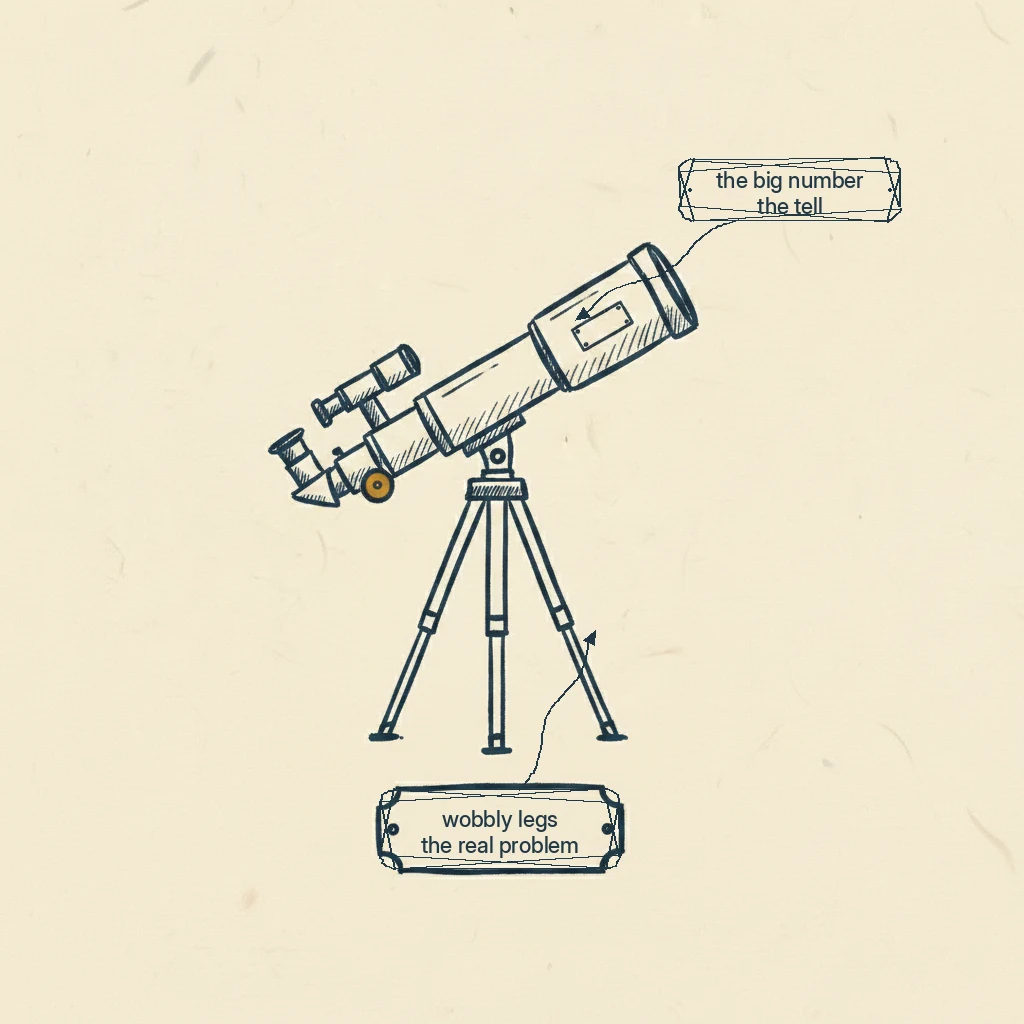
The number on the box is the tell
That 600X is the whole tell. Useful magnification has a hard limit, and only the width of the light-gathering end sets it, never the price. Do the arithmetic on a little three-inch tube and it runs dry around a hundred and fifty times. A box shouting six hundred is quoting a number four times past anything its glass can actually deliver.
The way they fake the number is worth knowing. They take a very short eyepiece, add a Barlow (a small lens that doubles magnification), do the multiplication on a tube that can’t support it, and print the fantasy figure. One reviewer ran the math on a typical box: the eyepiece-plus-Barlow trick advertised four hundred fifty times, on a scope that would need to be nine inches wide for that number to mean anything. The box scope was three. And even where the number is real, pushing magnification too high just dims the image, so you get a big, faint blur instead of a small, sharp planet. High numbers on a cheap box aren’t a feature. They’re the warning label.
The mount is the real killer
If you remember one thing, remember this: the tripod is the product. A wobbly mount will make a 130mm scope perform worse than a rock-steady 70mm one. When the whole rig shivers every time you touch the focus knob, you can’t aim, you can’t focus, and you certainly can’t hold a planet still. That shiver, more than the optics, is what fills the January closet.
There’s a test you can do right in the store. Tap the end of the tube and watch the view settle. If it takes more than three or four seconds to stop shaking, walk away. And be careful with equatorial mounts, the kind with the two angled axes and the counterweight. They need polar alignment before every session, which a gift-buyer will never do, so a beginner spends the whole first night fighting the mount instead of seeing the sky. To be fair, some experienced owners defend them and started on one happily. But for a first scope bought as a gift, a plain alt-azimuth mount, which just swings up-down and left-right like a camera tripod, is the friendlier choice.
A couple of other tells, if you want the checklist. A “Bird-Jones” reflector is a cheap way to fake a long tube, and a veteran reviewer says avoid it. So is a skinny 0.965-inch eyepiece barrel, an old size that signals a bargain-bin build; you want the standard 1.25-inch. And a cheap computerized “GoTo” scope usually means a night spent fiddling with electronics instead of looking up.
Now let me talk you back off the ledge
Here’s the part the scary guides skip, and it matters. A modest cheap scope isn’t a scam by definition. The people who actually own the entry-level alt-az scopes will tell you they still show the moon beautifully and the planets well, and that neighborhood kids love them. Much of the famous frustration comes down to a wobbly mount and a buyer nobody ever showed how to use the thing, not the tube being worthless. One longtime observer even started on a hobby killer as a kid, and the picture it put in his head is what pulled him back to the sky nearly twenty years later.
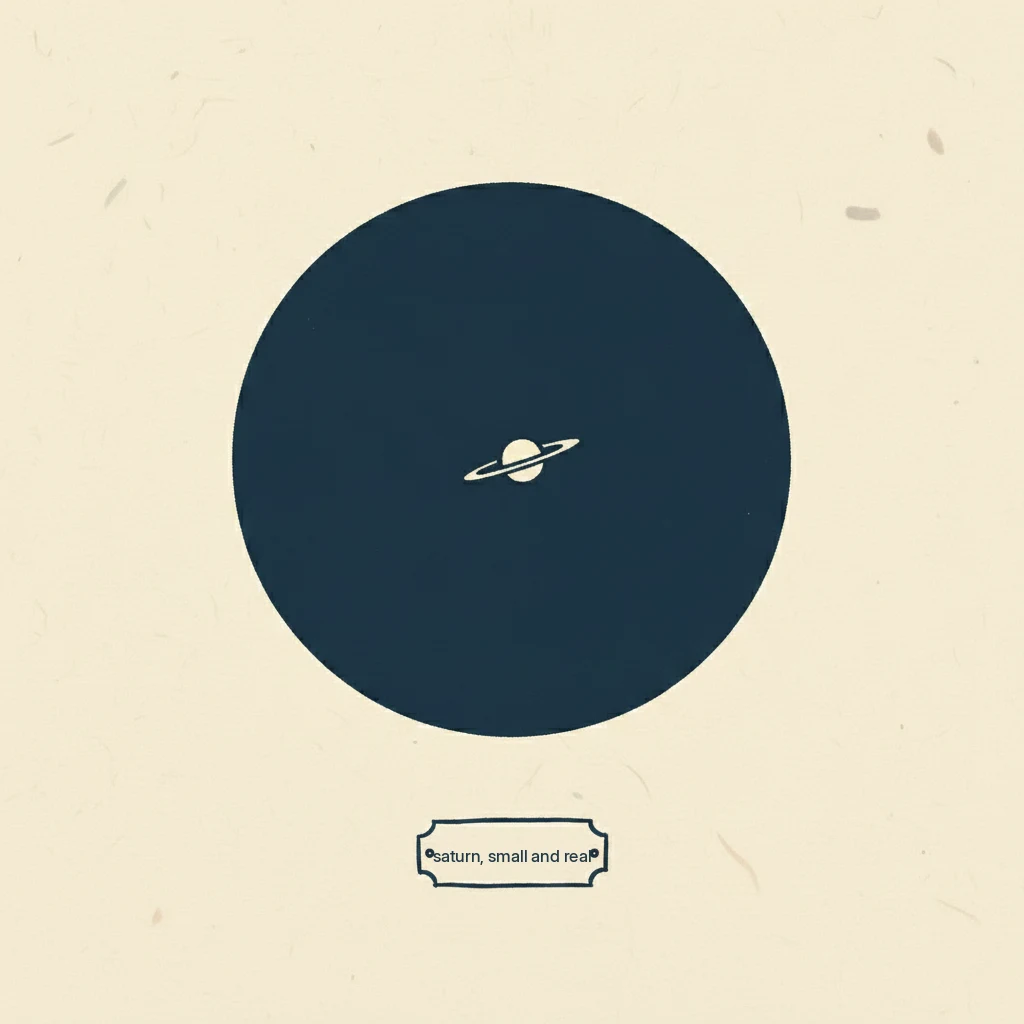
So don’t let the warnings talk you out of the gift. Let them talk you out of the wrong $79 box and into a modest, honest one. What you’ll see is still small and real: Saturn’s rings show up at low power, small and sharp, and Jupiter’s moons line up beside it. That view has never once disappointed a kid, as long as somebody told them ahead of time that it would be small.
So what should you actually buy?
Aim at the honest floor: a scope with a steady alt-az mount and real optics, somewhere between about $150 and $300. Here’s the researched shelf, in rounded prices as I write this. Nobody here has looked through these, and that’s said plainly on the About page.
- Gskyer 70mm AZ refractor, about $80 to $120. It’s honest optics in a portable kit, which is rare praise at that price.
- Celestron AstroMaster 70AZ, about $150 to $200 on the street (the maker’s sticker says closer to $200). No collimation ever, a five-minute setup, and owners call it great on the moon.
- Sky-Watcher Heritage 130P, about $230 to $280. A collapsible tabletop tube that stores in a backpack.
- Celestron StarSense Explorer LT 114AZ, about $260. Your phone points you at objects, which for a beginner is the difference between finding Saturn and giving up.
Owners keep steering people toward tabletop Dobsonians (a simple scope that sits on a small base and swings by hand) in the $250 to $350 range as easy, good-value beginner scopes. My judgment, said plainly: the cheapest scope worth buying is the one with a steady mount and honest optics near that $150 floor, not the 600x department-store box that becomes the closet.
Questions people actually ask
How much does a telescope cost?
A first telescope worth owning runs about $150 to $350. You can spend less, but below roughly $100 the optics and the mount both fall off a cliff, and you’re paying for a number on a box. You can spend much more, but a beginner won’t use the extra capability yet. Buy at the moment interest spikes, and buy cheap enough that losing it wouldn’t sting.
Are cheap telescopes any good?
The good cheap ones are genuinely good. The trick is telling them apart. A steady mount, honest optics, and no wild magnification claim will show you the moon and planets for real. Owners of the modest alt-az scopes are happy with them. It’s the $79 boxes with the giant numbers and the shivering tripods that earned the hobby killer name.
What’s the best cheap telescope on Amazon?
Same rule applies wherever you shop: judge the mount first, then the aperture, and ignore the magnification claim entirely. The cheap end of the Amazon shelf is exactly where the 600x hobby killers live, so vet hard. The Gskyer 70mm AZ is one budget model reviewers call honest, which puts it ahead of most of its neighbors.
Why do cheap telescopes end up in the closet?
Two reasons, and neither is the price. First, the mount shakes, so the kid can’t hold anything in view. Second, nobody set expectations, so a small, real Saturn feels like a letdown next to the poster on the box. Fix both, a steady mount and an honest heads-up, and the same cheap scope stays out of the closet.
What I’d tell a parent in the hallway
Skip the $79 box, spend about $150 to $250 on a scope with a rock-steady mount, and tell the kid ahead of time that the planets will be small. You’ll have bought wonder instead of a boat anchor.
A couple of things you’re probably also wondering:
- What do the planets actually look like once you’re set up? See telescope to see planets.
- Buying this for a specific kid? See best kids telescope.
- Wondering if binoculars are the smarter first buy? See stargazing for beginners.
Ray Ostrander
Ray spent three decades explaining the sky to twelve-year-olds and their parents, and every January, hearing which Christmas telescopes ended up in the closet. He doesn't own a wall of gear and won't pretend to. He reads everything, tells you what owners agree on, and flags what's just his judgment. His goal is simple: no more January closets.