
The Best Telescope: Just Tell Me Which One to Buy
For most first buyers the best telescope is a $150 to $350 pick chosen for aperture and a steady mount, like the Celestron AstroMaster 70AZ at about $150 to $200. Not the 600x box, not the 8-inch Dobsonian you'll wrestle in the driveway.
 Ray Ostrander · Updated July 24, 2026 · how I decide
If you buy through a link here, the site earns a little. It's never why anything gets picked.
If you want one answer, here it is. For most first buyers the best telescope is a $150 to $350 pick chosen for aperture and a steady mount, not for the magnification number on the box. The common overall pick is the Celestron AstroMaster 70AZ at about $150 to $200. It shows you the Moon, Saturn’s rings and Jupiter’s moons, small but real, on the first clear night.
That’s the whole decision, and I’ll stand behind it. Everything below is the reasoning under it, because a parent cornering me in the hallway deserves the reasons, not just the verdict.
What's on this page
- The one thing you actually have to get right
- The best telescope for the money, budget by budget
- Refractor, reflector, or the computerized kind?
- About that top pick, honestly
- What you'll actually see, before you spend a dime
- The traps in this aisle
- Questions people actually ask
- What I'd tell a parent in the hallway
The one thing you actually have to get right
Here’s what’s actually happening when you shop for a telescope. There’s exactly one number that decides what you’ll see, and it’s almost never the number the box is shouting. That number is aperture, which is just the width of the end that gathers light. A wider opening collects more light, and more light is what turns a smudge into Saturn’s rings.
The magnification number is a trap. Physics says the highest useful magnification is about fifty times the aperture in inches, so a 70mm scope tops out near 140x and that’s it. A box screaming “600X!” over a dinner-plate photo of Saturn isn’t offering you more. It’s offering you a big, dim, mushy blur of the thing you came to see. Aperture beats magnification, every single time, and that’s the first thing I’d want you to carry out of here.
The second thing is the tripod. A wobbly mount is the reason so many telescopes end up in a closet by January. The tripod truth is plain: a wobbly mount makes a 130mm scope deliver worse results than a stable 70mm. The tripod is the product. If the whole rig shivers every time you touch the focus knob, you’ll never hold a planet still long enough to enjoy it.
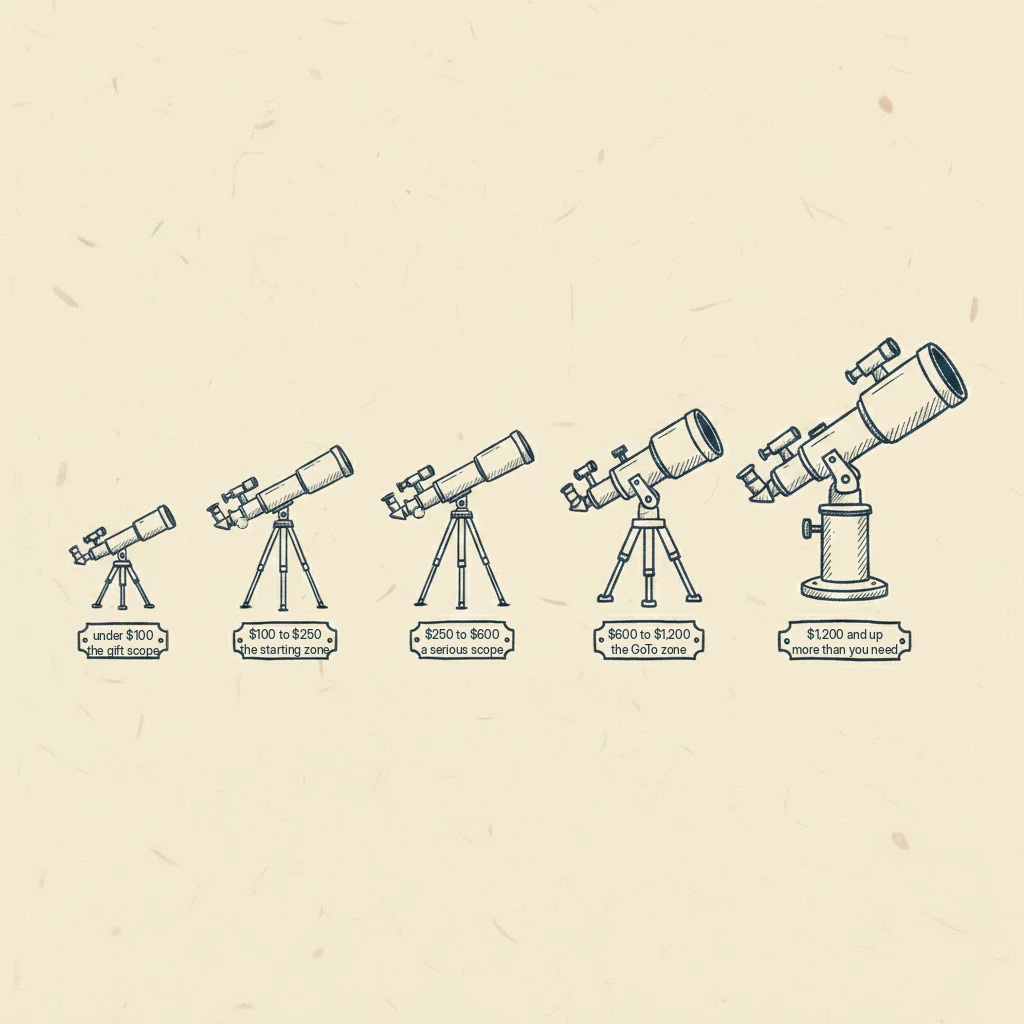
The best telescope for the money, budget by budget
The head question hides a second question: what’s your budget. So here’s the honest ladder, cheapest first. Every price is rounded to what I’m seeing as I write this, and nobody at this site has looked through any of these. We read the reviews, the spec sheets and the owner threads, and we tell you which is which.
| Your budget | What you get | What to skip |
|---|---|---|
| Under $100 | A little tabletop gift scope like the Celestron FirstScope, about $50 to $75. Fine for the Moon, real, but it’s a gift, not “the best telescope.” | The department-store 600x box in this same price range. That’s the closet special. |
| $100 to $250 | The best-value zone, and where I’d start most people. The Celestron AstroMaster 70AZ, about $150 to $200. The Sky-Watcher Heritage 130P runs a touch over this band at about $230 to $280, and it’s worth it. | Anything sold mainly on its magnification number instead of its aperture. |
| $250 to $600 | A serious first scope. The Celestron StarSense Explorer LT 114AZ, about $260, uses your phone to find things. The Sky-Watcher Heritage 150 tabletop reflector runs about $355. | Rushing to computerized “GoTo” before you can find the Moon by hand. |
| $600 to $1,200 | Computerized GoTo scopes like the Celestron NexStar 6SE, about $1,050, or the 8-inch Sky-Watcher Dobsonian at about $725. | Buying GoTo to skip learning the sky. First-night frustration lives here. |
| $1,200 and up | High-performance glass, like the Celestron NexStar 8SE at about $1,500. Real capability, and more than a beginner reaches for. | Treating a first Christmas gift like an heirloom investment. |
If you searched for the best telescope for $500, you’re squarely in that middle band, and the StarSense Explorer is the one I’d point you at, because finding things is the skill that keeps a scope out of the closet. If you searched for the best telescope for $1,000, you can reach a GoTo NexStar or that 8-inch Dobsonian, and I’ll tell you below why the Dob is both the right answer and the wrong first gift.
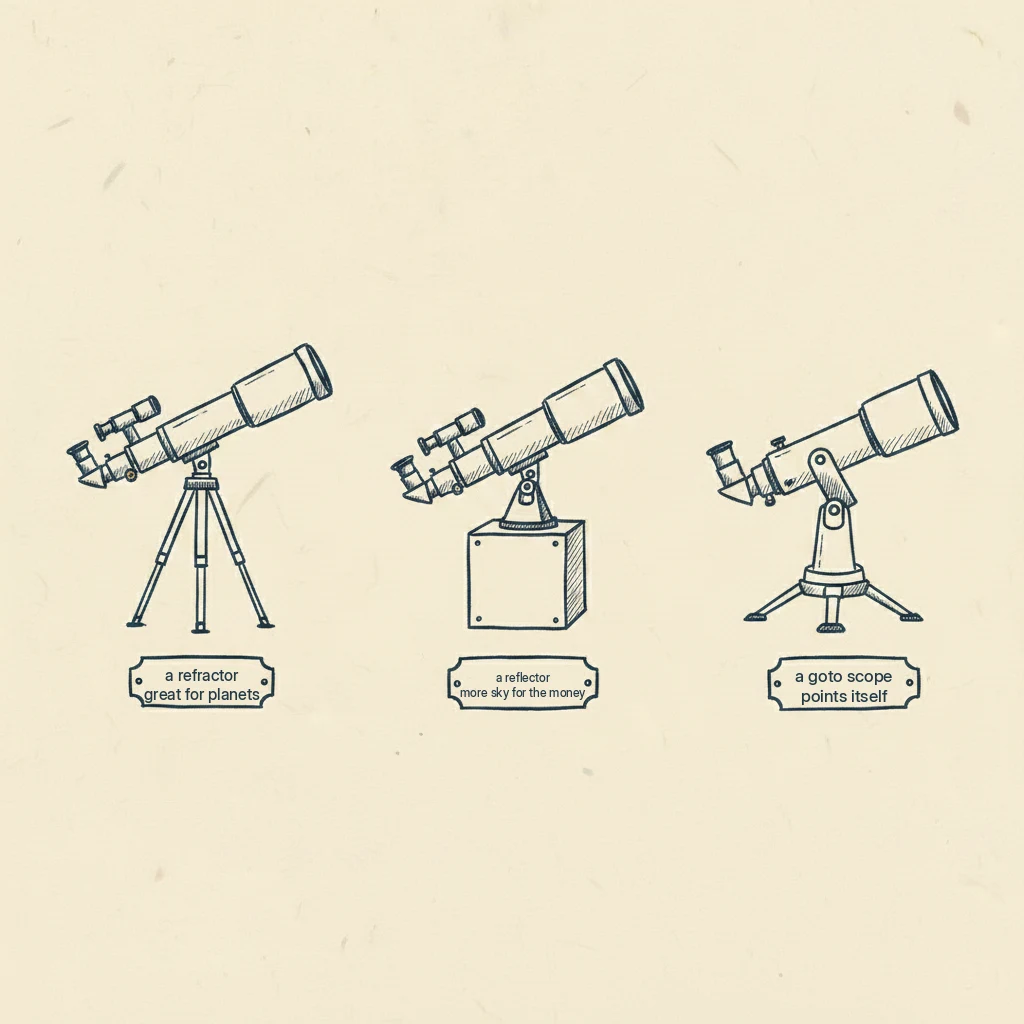
Refractor, reflector, or the computerized kind?
You’ll see three shapes on the shelf, and the plain-word version is short. A refractor is the classic long tube. It’s great for the Moon and planets, sharp and grab-and-go, but you pay more per inch of aperture. A reflector, including the big-tube kind called a Dobsonian, is a light bucket: it gives you the most sky for your money, at the cost of an occasional tune-up called collimation, which is just nudging the mirrors back into line. The compound, computerized “GoTo” scopes are the all-rounders that point themselves, and you pay for the electronics.
For a first scope aimed at the Moon and planets, a 70mm refractor or a 130mm tabletop reflector is the honest sweet spot. That’s not me hedging. That’s the pick.
About that top pick, honestly
A common overall best-beginner pick is the Celestron AstroMaster 70AZ, around $150 to $200. It sets up in under ten minutes and shows Saturn’s rings clearly. On paper it’s a clean first buy.
Now the part a shelf of fake testers won’t tell you. Owners keep arguing about the AstroMaster line, and some of them use the words “hobby killer” for its mounts. That tension is real, and I’m not going to pretend it away. Owners of the 70AZ specifically report good Moon and planet views, so the tube is fine. The beef is the mount on the wider line.
So here’s the honest read. The AstroMaster 70AZ is a good pick if, and only if, the tripod is steady. There’s a test for that, and it takes five seconds. Tap the top of the tube and watch the image in the eyepiece. If it settles down in a second or two, buy it. If it keeps shivering for more than three or four seconds, walk away, whatever the badge says. That one test protects you from most of the January closets I’ve watched happen.
What you’ll actually see, before you spend a dime
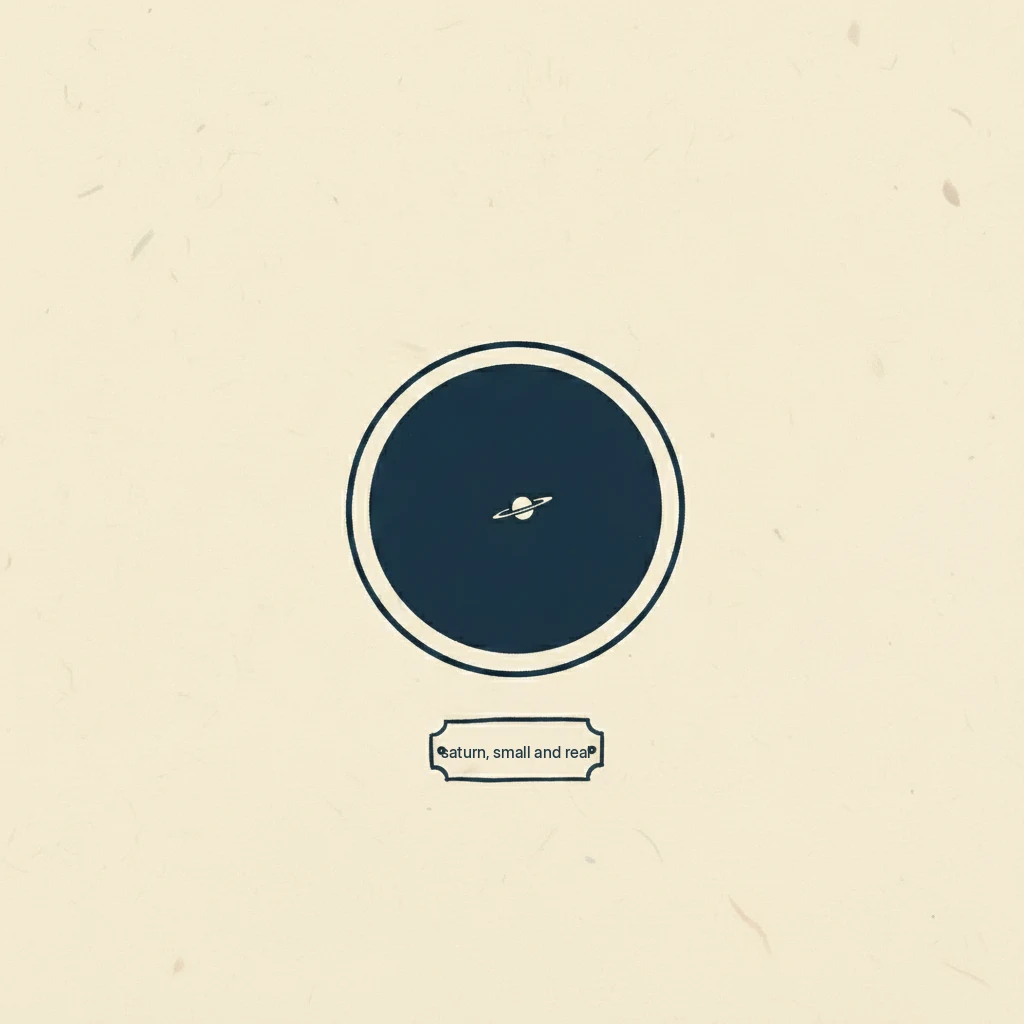
Let me set the expectation the listicles skip, because it’s the difference between wonder and disappointment. A good first scope shows the Moon in real, cratered detail, and that alone is worth the money. Point it at Jupiter and you get a small striped disc with a few moons in a line beside it. Point it at Saturn and the rings show up plainly at about thirty times magnification.
Saturn is the one that gets people. It’s a bright bead with a thin bright line wrapped around it, small and sharp and unmistakably there. The light making that little ring landed in your eye at the end of an eighty-minute trip from Saturn itself, and I go on about that at proper length on the planets page. Nobody who sees it for the first time is disappointed that it’s small.
What a first scope won’t do is show you the colorful galaxies and nebulae from the posters. Those are stacked long exposures built by a camera and a computer over hours. To your eye a galaxy is a faint gray smudge, real and quietly amazing and still a smudge. That’s a different neighbor’s garage, and a much bigger bill. Buy for the Moon and the planets, and treat any galaxy you catch as a bonus.
The traps in this aisle
Four things send people home with the wrong box, so let me name all four plainly.
The magnification box is the big one. If the front of the box advertises “600x” or any huge times-number, that’s your signal to walk away. A 60mm scope’s useful limit is around 120x to 140x, and everything past that’s dim mush.
The wobbly mount is the quiet one. It ruins good glass. Do the tap test above on anything you’re about to buy.
The GoTo shortcut is the expensive one. Low-end computerized scopes can eat the whole night: buyers spend it fiddling with electronics instead of looking up. GoTo is a lovely step-up once you can find the Moon by hand. It’s a poor first shortcut.
And the over-scope trap catches the eager ones. The 8-inch Dobsonian is genuinely the hobby’s one right answer on aperture for the money, roughly double the light of a 6-inch. Owners agree on that. They also agree it’s big, heavy, and the wrong first Christmas gift: too much scope, too soon, and it lives in the garage because nobody carries it out. Buy it when you’re ready, not first.
Questions people actually ask
What’s the best telescope for beginners?
For most beginners it’s a $150 to $350 scope bought for aperture and a steady mount. The Celestron AstroMaster 70AZ at about $150 to $200 is the common reviewer pick, as long as its tripod passes the tap test. A 130mm tabletop reflector like the Sky-Watcher Heritage is the step up if you have a solid table to set it on.
What’s the best telescope for adults?
The same honest answer, with more room to spend. An adult who wants the Moon and planets is well served by that 70mm to 130mm first scope. If you’ll actually carry it out and learn the sky, a 6-inch or 8-inch Dobsonian gives you the most view for the money later. The scope you carry outside beats the fancier one that stays in.
What’s the best telescope for the money?
Aperture per dollar, on a mount that doesn’t shake. Just past the $250 line the Sky-Watcher Heritage 130P, about $230 to $280, is widely recommended as a standout value in the beginner market. Below $100 you’re mostly buying frustration: plan on $150 to $350 for a scope that won’t disappoint.
What’s the best telescope for the Moon?
Almost any honest scope shows the Moon beautifully, which is why the Moon is where I tell every beginner to start. A small 70mm refractor gives you sharp craters and shadows along the day-night line. You don’t need aperture or magnification heroics for the Moon. You need a steady tripod and a clear night.
Can I use a telescope from the city?
Yes, for the Moon and the planets. Owners agree they shrug off light pollution almost entirely. Saturn’s rings and Jupiter’s moons look the same from a city backyard as they do out in the country. It’s the faint galaxies and nebulae that need a dark drive out of town, and those aren’t a first scope’s job anyway.
How much should I spend on my first telescope?
Plan on $150 to $350. Below $100 the optics quality drops off and you’re often paying for the magnification box instead of the view. Above that you’re buying capability a beginner won’t reach for yet. Buy at the moment the interest spikes, and buy cheap enough that losing it wouldn’t hurt.
What I’d tell a parent in the hallway
At $150 to $200, buy the AstroMaster 70AZ and tap the tripod before you trust it. From about $230 to $355, buy the Sky-Watcher Heritage 130P or 150 and set it on a solid table. Skip the 600x box no matter how good the photo looks, and don’t buy the 8-inch Dobsonian until nobody in the house needs convincing anymore.
A few things you’re probably also wondering:
- Are the planets really the point? See telescope to see planets.
- Worried about wasting money on a hobby killer? See best cheap telescope.
- Buying for a kid specifically? See best kids telescope.
- Is Saturn the whole reason? See best telescope to see saturn.
- Sticker shock? See how much does a telescope cost.
- Not sure you need a telescope at all yet? See stargazing for beginners.
Ray Ostrander
Ray spent three decades explaining the sky to twelve-year-olds and their parents, and every January, hearing which Christmas telescopes ended up in the closet. He doesn't own a wall of gear and won't pretend to. He reads everything, tells you what owners agree on, and flags what's just his judgment. His goal is simple: no more January closets.