
The Best Binoculars for Kids: Low Power, Tough Build, Cheap Enough to Drop
For a kid, buy low power and durability over everything: a 6x to 8x rubber-armored pair (2x to 4x for toddlers), $10 to $40 because it will get dropped. A National Geographic 6x21 at about $15 is a fine first pair.
 Ray Ostrander · Updated July 24, 2026 · how I decide
If you buy through a link here, the site earns a little. It's never why anything gets picked.
For a kid, buy low power and durability over everything else. A 6x to 8x rubber-armored pair is the sweet spot, dropping to 2x to 4x for a toddler, with a breakaway strap for the little ones. Spend $10 to $40, because a kid’s binoculars will get dropped, sat on, and left in the yard. A National Geographic 6x21 at about $15 is a genuinely fine first pair. Only step up to a real 8x32 once the interest sticks.
I spent thirty-one years watching kids light up over the outdoors, and I’ll tell you plainly: a $15 pair of binoculars is a wonderful gift, not a cheap one. Let me help you pick the right one for the age you’re buying for.
What's on this page
The one thing everyone gets backward: power
This is the opposite of what the box wants you to think. A “powerful” kid binocular, one marked 10x or 12x, is the wrong gift. High power magnifies every wiggle of a small, excited pair of hands, so the view shakes into a blur and the child gives up. It also narrows the circle they see, which makes finding a bird or a boat much harder for someone still learning to aim.
Low power is the right buy, not a lesser one. Two things matter most for a kid: low magnification, 8x at the very most even for a teenager, and a wide field of view so they can actually land on what they’re looking at. A steady, easy-to-aim 6x pair beats a shaky 12x pair every single day. Once someone tells you that, the shopping gets simple.
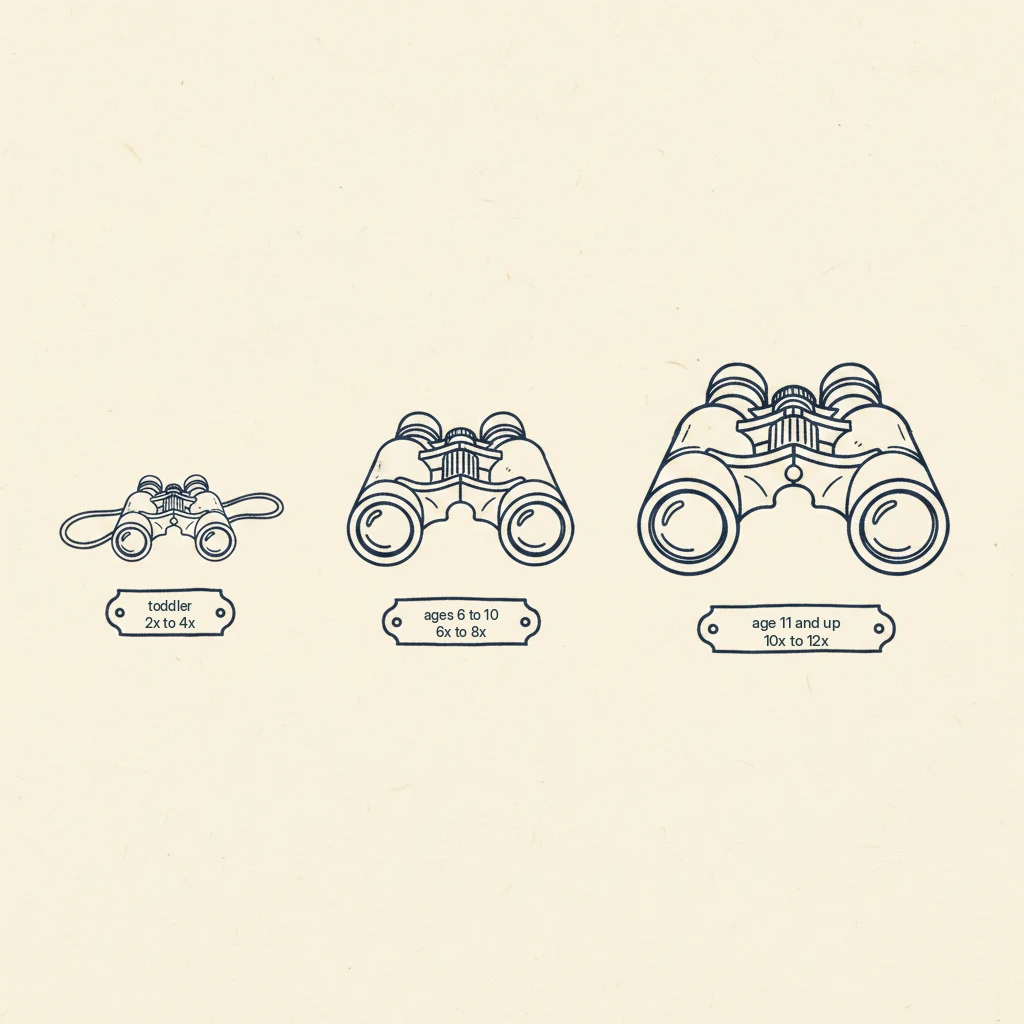
Match the power to the age
The age ladder is short and worth following. For ages 3 to 5, keep it around 2x to 4x, closer to a sturdy toy, and use a breakaway strap so it can’t catch around a small neck. Once a child is past preschool, roughly 6 to 10, they’re ready for real binoculars at 6x to 8x, which is also where the best kid pairs live. Around 11 and up, a bigger kid can handle 10x to 12x if they want the extra reach, though a good 8x still serves them beautifully.
If you’re buying a gift and you’re not sure of the exact readiness, a 6x to 8x pair is the safe middle. It’s usable by most school-age kids and grows with them for years.
Durability is the real spec
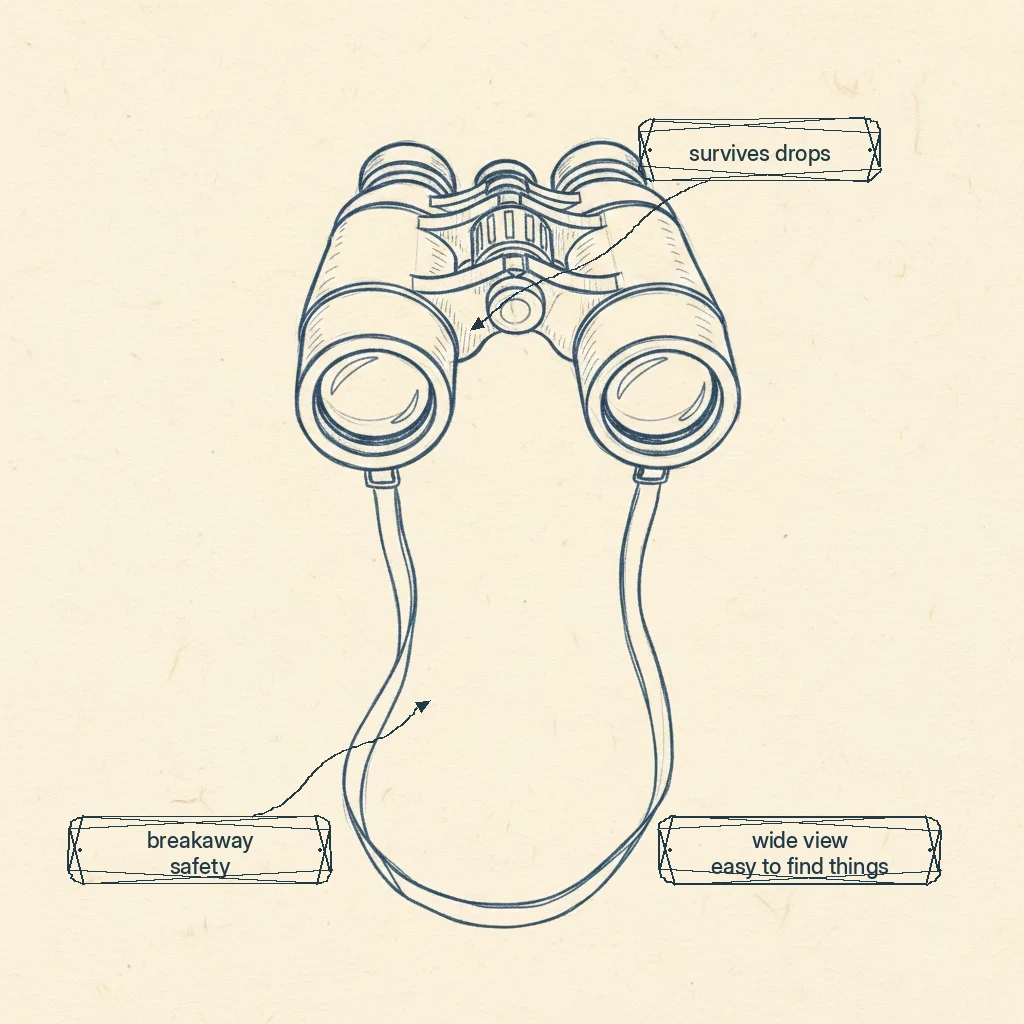
Forget the fancy features for a moment. The spec that matters most on a kid’s binocular is whether it survives being dropped, because it will be dropped. Buy rubber armor, which cushions the optics through the inevitable tumbles, and buy a price you can shrug off if the pair goes missing at the campground. This is the “buy cheap enough to lose” rule, and nowhere does it apply more than here.
For the youngest kids, one feature crosses from nice-to-have into genuine safety: a breakaway strap that pulls apart under tension, so a neck strap can’t become a hazard. And skip the instinct to hand a small child a big, serious adult pair. It’s too heavy for little arms, and the eyepieces are set too far apart for a small face, so they’ll see two circles instead of one. Fit and weight beat spec for a child.
The kids shelf, cheapest first
All researched, none tested by anyone here, and you’ll find that said plainly on the About page. Prices are rounded to what I’m seeing as I write this.
- Celestron Kids 4x30, about $10. A first “real” pair for a little one, low power and easy to hold.
- National Geographic 6x21 (Bresser), about $15, aimed at ages 4 to 7. A great-value starter.
- Carson Hawk Kids 5x30, about $15, for ages 6 and up, tough and simple.
- SVBONY SV10 8x25, about $20, a step up in power for ages 7 to 10.
- THINKPEAK 8x21, about $40, a sturdy young-starter pair.
- Celestron Outland X 8x25, about $70, a genuine grown-up compact a kid won’t outgrow.
- Nikon Prostaff P3 8x30, about $130, if you want a pair that starts as a kid’s and becomes a lifelong birding binocular.
When the interest clearly sticks, the step-up nearly everyone recommends is the Celestron Nature DX 8x32, a nearly indestructible pair that’s a common entry point into real birding. That’s the one a kid grows into, not the one they start with.
Questions people actually ask
What magnification binoculars are best for a child?
6x to 8x for most kids, and 2x to 4x for toddlers. Low power keeps the image steady in small, excited hands and gives a wide view so a child can actually find things. A “powerful” 10x or 12x pair shakes too much and frustrates young users. Even for teenagers, 8x is about the practical ceiling for handheld use.
What binoculars should I buy for a 7 or 8 year old?
A 6x to 8x rubber-armored pair in the $15 to $40 range is ideal for that age. Something like a National Geographic 6x21 or an 8x25 kid pair gives real, usable views without costing enough to worry about. Look for rubber armor and a comfortable, not-too-wide fit for a smaller face, and don’t overspend on a first pair.
Are cheap kids binoculars a waste of money?
Not at all. A $15 pair is the right call, not a compromise. Kids drop things, lose things, and sometimes lose interest, and a cheap, durable pair meets all three honestly. If the interest sticks, that’s the happy moment to step up to a lasting 8x32. Spending heirloom money on a first pair is the actual waste.
What I’d tell a parent in the hallway
For a toddler, a simple 2x to 4x pair with a breakaway strap. For a school-age kid, a rubber-armored 6x to 8x pair around $15 to $40, and don’t lose sleep over the brand. If it clicks and they’re still asking to bring it everywhere by spring, that’s your cue to buy the Nature DX 8x32 they’ll keep for years. A kid’s interest that shows up for a trip or a season is real interest, and it deserves gear that fits the moment.
A few things you’re probably also wondering:
- Buying for a family cruise or trip? See best binoculars for alaska cruise.
- Will a kid’s pair work at the ballgame? See binoculars for sporting events.
- Does your child wear glasses? See binoculars for glasses wearers.
- Telescope or binoculars for a curious kid? Start here: stargazing for beginners.
Ray Ostrander
Ray spent three decades explaining the sky to twelve-year-olds and their parents, and every January, hearing which Christmas telescopes ended up in the closet. He doesn't own a wall of gear and won't pretend to. He reads everything, tells you what owners agree on, and flags what's just his judgment. His goal is simple: no more January closets.