
The Best Telescope for Astrophotography: The Honest Answer About the Money
The mount, not the telescope, is the instrument in astrophotography, and a real beginner build runs about $2,700. This isn't my table, so here is who to learn it from and what to do tonight instead.
 Ray Ostrander · Updated July 24, 2026 · how I decide
If you buy through a link here, the site earns a little. It's never why anything gets picked.
I’m going to do something on this page I don’t do anywhere else on this site. I’m going to tell you this isn’t my table, and then I’m going to point you at the people whose table it is. But first, the number, because the number decides this more honestly than I can. A real beginner astrophotography setup runs about $2,700, and the telescope is only the second most expensive thing in it. The most expensive thing is the mount, which is the part almost nobody comes here looking for.
Let me show you why, and then let me help you figure out which of two very different people you actually are.
What's on this page
Where that $2,700 comes from
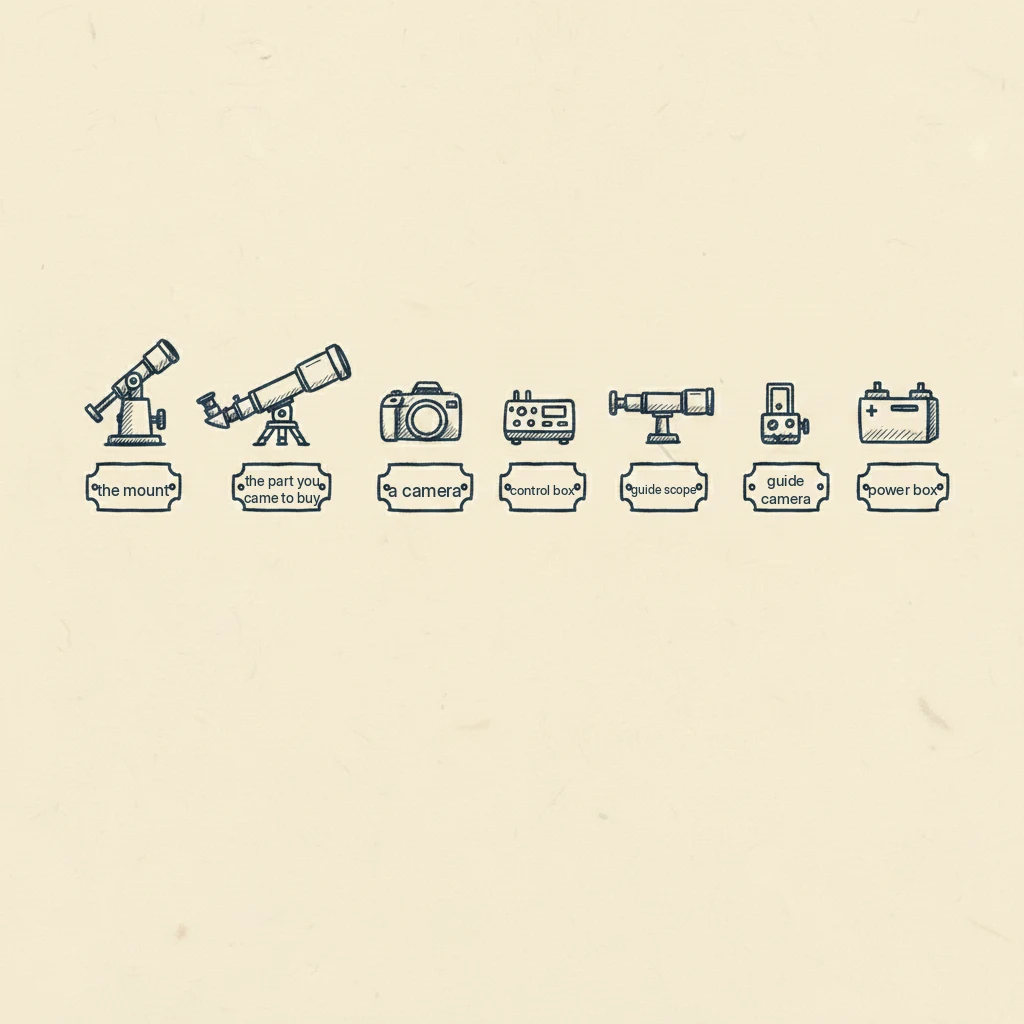
There’s a working astrophotographer who actually does this and publishes all of it. Not “reviewed it once.” Does it, in his own backyard, and publishes the whole build with the prices. His budget starter rig, the one he wrote up in the fall of 2025, came to about $2,700, and it has seven separate pieces in it: a mount, a telescope, a dedicated astronomy camera, a little control computer, a second small telescope that only exists to help aim, a second camera to go with it, and a power box to run all of it.
Read that list again. The telescope is one line out of seven. And here’s the part that surprises everybody: in his build, the mount cost more than the telescope did. That’s not a fluke and it’s not him overspending. That’s the whole shape of this hobby.
This is the economy version, by the way, and he says so himself: he’s keeping costs down by using entry-level gear, and it still lands near $2,700. When the man who writes the budget guide tells you this is the cheap way, believe him.
The rest of the world agrees with the number, too. The working astrophotography community puts the floor even higher, at $1,300 or more just for the mount alone. His budget mount was cheaper than that. Somewhere between those two figures is the real entry point, and both of them are real, so I’m not going to split the difference and hand you a tidy average that’s true nowhere. I’m going to hand you both and let you sit with them.
The mount is the instrument, not the telescope
You came here thinking the telescope takes the picture. It doesn’t. The mount does.
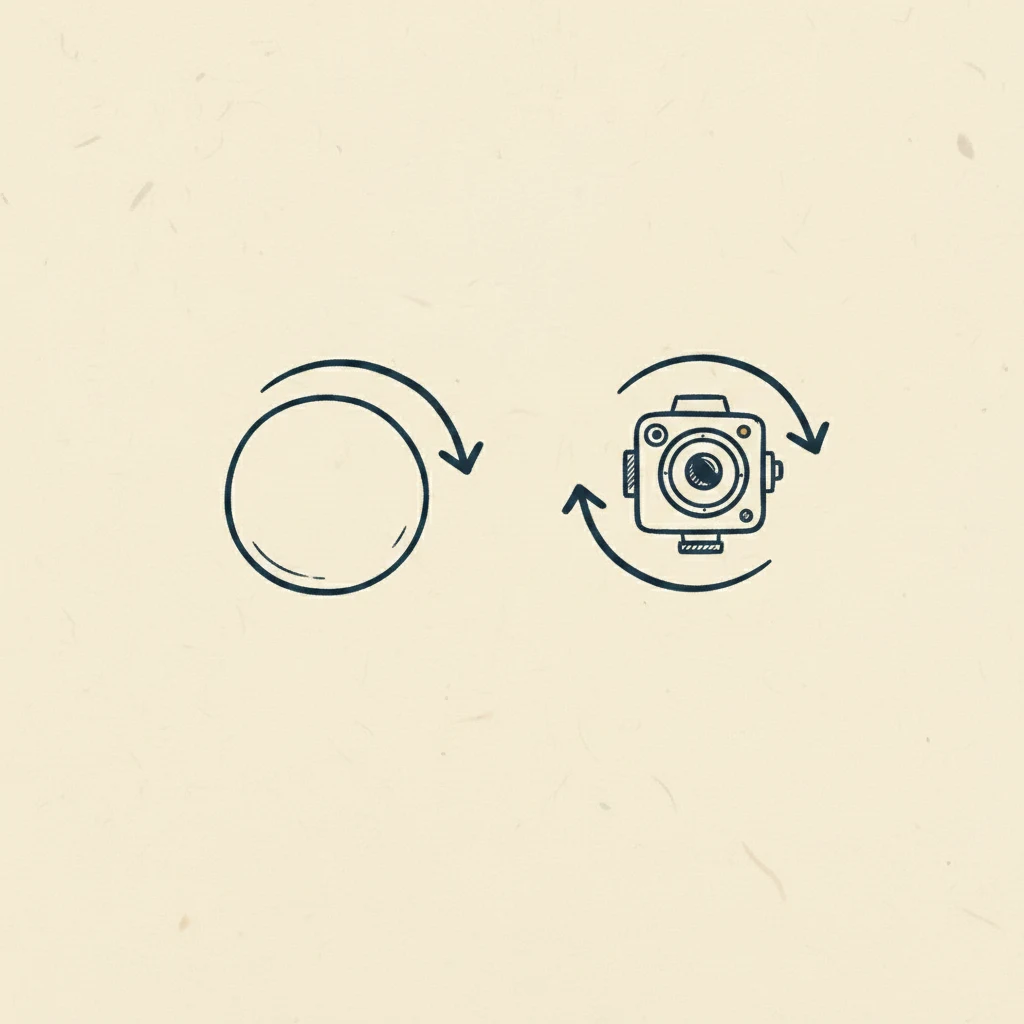
Here’s what’s actually happening. A photograph of a galaxy isn’t a snapshot. It’s a long exposure, sometimes minutes of the shutter held open, sometimes hours of those stacked on top of each other. And the whole time that shutter is open, the Earth is turning underneath you. Point a still camera at the sky for two minutes and the stars smear into streaks, because you were moving the whole time and didn’t feel it.
So the entire job of the mount, an equatorial mount, which is just a stand built to turn slowly in the exact opposite direction the Earth turns, is to cancel out the spin of the planet for the length of the exposure. Hold the galaxy perfectly still while the ground moves. That’s a mechanical problem, a demanding one, and it’s why the stand costs more than the glass. You’re not paying for a tripod. You’re paying for a machine that quietly unwinds the rotation of the Earth.
That’s the one thing on this page I can teach you cleanly, because explaining is what I do. The rest of it, the cameras and the guiding and the software, I can’t, and I’m about to be honest with you about that.
Two people type “best telescope for astrophotography”
One of them knows what a mount is and is comparing rigs. If that’s you, I have nothing for you that you don’t already have, and I mean that as respect, not a brush-off. Go read the practitioners at the bottom of this page. They’ll serve you better than I can, and I’d rather send you to them than pretend.
The other person, and honestly it’s most of the people who land here, got here by a path I know well. You looked at a photograph of the Andromeda galaxy, that glowing spiral, and then you looked through an eyepiece, or you read what an eyepiece actually shows, and you found out the truth: to your eye, deep-sky objects are faint gray smudges, dimmer and colorless, nothing like the poster. And you did the reasonable thing. You thought, fine, then I’ll photograph it.
Here’s the loop I want to name for you gently, because nobody named it for me either. The photograph that disappointed you at the eyepiece is the exact same photograph that’s now pulling you toward a $2,700 hobby. It was never something the eye could see. It was always something a rig like the one above had to build, over hours, out of stacked long exposures and a lot of processing on a computer afterward. Wanting that image is completely fair. But wanting it means you’ve quietly changed hobbies, from looking to imaging, and those are as different as fishing and boatbuilding. Nobody told you that at the door. I’m telling you now, before you spend the money, not after.
And about the difficulty, in his own telling: he calls the learning curve moderately steep, and he says that describing someone who’s coming over from a regular DSLR camera and already knows how to run one. If that’s not you yet, just locate yourself honestly on that scale. That’s all I’m asking.
So which fork are you on
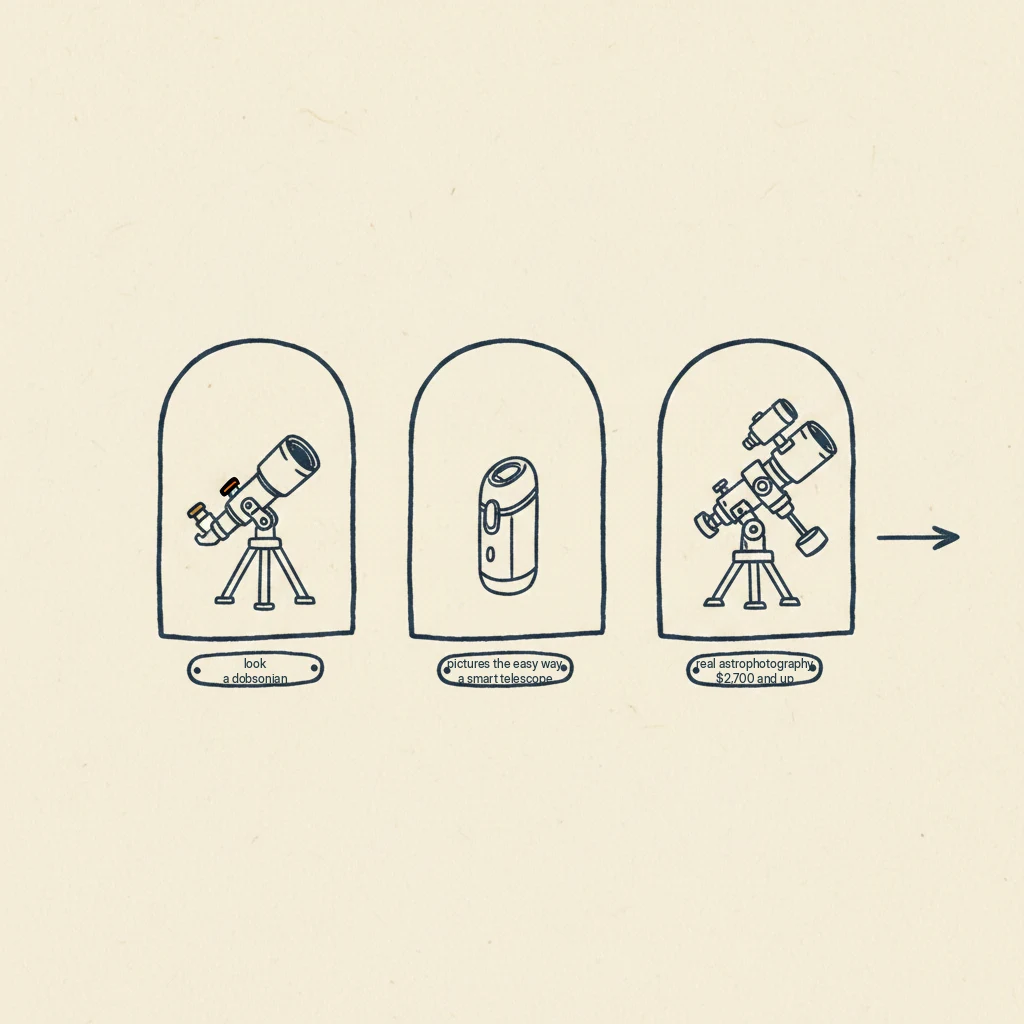
There are really three doors here, and picking the right one saves you the most money you’ll ever save reading a web page.
You wanted to take pictures, the easy way. There’s a whole class of gear now called smart telescopes. You point them, they find the target and stack the exposures themselves, and a picture shows up on your phone with none of the mount-and-guiding learning curve. They’re a real answer, not a gadget. I’m not going to recommend a specific one or quote you a price, because that’s not the job of this page and this page sells you nothing. I’m just telling you the category exists, so you know the whole world isn’t the $2,700 rig.
You wanted to see things with your own eye. Then you were never in the astrophotography aisle to begin with, and the good news is your answer costs a third as much. It’s a big-bucket scope you can actually carry outside, and the other half of the answer is free: a drive to darker sky does more for what you’ll see than any equipment upgrade. I’ve got that whole conversation waiting for you over at best telescope for deep space and telescope to see planets. Start there.
You want astrophotography proper. Then you want the people who live in it, and I’ll hand you off in a second, warmly.
What you can do tonight, for free
Before you spend a cent, know this: the moon and the planets don’t need the rig. A phone camera held up to a plain telescope eyepiece takes a genuinely good moon photo, craters and all. Deep-sky is the part that needs the $2,700 machine. The moon and Saturn will sit still enough for your pocket. So if what you really wanted was a picture to show somebody, you can have one this week, from the driveway, with gear you might already have or can buy for the price of dinner out.
Questions people actually ask
Can I do astrophotography on a budget?
You can keep it near the floor, and the man who writes the budget guides puts that floor around $2,700 for a starter deep-sky rig, with the community saying $1,300 or more of that’s the mount alone. “Budget” here means the economy version of an expensive hobby, not a cheap one. If a listing promises you the whole thing for under $500, it isn’t the thing these builds describe.
Why does the mount cost more than the telescope?
Because the mount is doing the hard job. A space photo is a long exposure, and the Earth turns during it, so the mount has to slowly counter-rotate to hold the target still for minutes at a time. That precision costs money. The telescope just points where the mount aims it.
Isn’t there an “astrophotography telescope” I can just buy?
There’s no such single purchase. The telescope is one of about seven parts, and not the deciding one. Buy only “an astrophotography telescope” and you’ve bought a tube you can’t use yet. That’s the most common expensive mistake on this door, and I’d rather you hear it from me than learn it from a return-shipping label.
What about the beautiful photos on the product pages?
Every one of those was made by a rig like the one at the top of this page, plus hours of stacking and editing. None of them came out of the eyepiece you were about to buy. It’s the same rule as the box photo on a starter scope: never trust the picture to tell you what you’ll see.
Where the good version of this actually lives
This is the serious-amateur’s garage, and it’s a wonderful one. I’m glad it exists and I’m glad the people in it are as generous as they are. So here’s the kind of place to go learn from, and I get nothing for sending you:
A working astrophotographer who publishes real builds. Find the people who actually do this and post the whole thing start to finish, the real gear and the real prices, in their own backyards. They’re who I’ve been quoting. If one voice is going to teach you, make it someone who images and shows the receipts.
The working astrophotography forums. Where the people who actually image talk to each other. Read one for a week before you buy anything.
A local astronomy club or a star party. This is the real on-ramp, and it’s the cheapest one. People will let you look through their rigs, tell you what to skip, and talk you out of the $2,700 mistake for free. Show up. Bring coffee.
If you came here because a photograph let you down at the eyepiece, that photograph took seven pieces of equipment and a lot of patience to make, and I’m not the one to teach you that. What I can tell you plainly is this: figure out first whether you want to look or to photograph, spend nothing until you know, and if it’s photographs you’re after, go find those three doors above. I’ll be glad you did.
Ray Ostrander
Ray spent three decades explaining the sky to twelve-year-olds and their parents, and every January, hearing which Christmas telescopes ended up in the closet. He doesn't own a wall of gear and won't pretend to. He reads everything, tells you what owners agree on, and flags what's just his judgment. His goal is simple: no more January closets.