
Binoculars for Boating: Why 7x50 Marine Is the Answer
For boating you want 7x50 marine binoculars: waterproof, fog-proof, and rubber-armored, like the Steiner Marine 7x50 at about $375. The low 7x power is a feature on a moving deck, not a weakness.
 Ray Ostrander · Updated July 24, 2026 · how I decide
If you buy through a link here, the site earns a little. It's never why anything gets picked.
Here’s the answer, and it surprises people. For boating you want 7x50 marine binoculars: waterproof, fog-proof, and rubber-armored, like the Steiner Marine 7x50 at about $375. The low 7x power is the feature here, not a weakness. On a moving deck, more magnification just magnifies the rocking, so a steadier 7x actually shows you more. A built-in compass is a serious-sailor extra, optional for a casual boater or angler.
The insider word for this whole category is “marine binoculars,” and once you know the short spec behind it, the shopping gets easy.
What's on this page
The counterintuitive part: less power sees more on the water
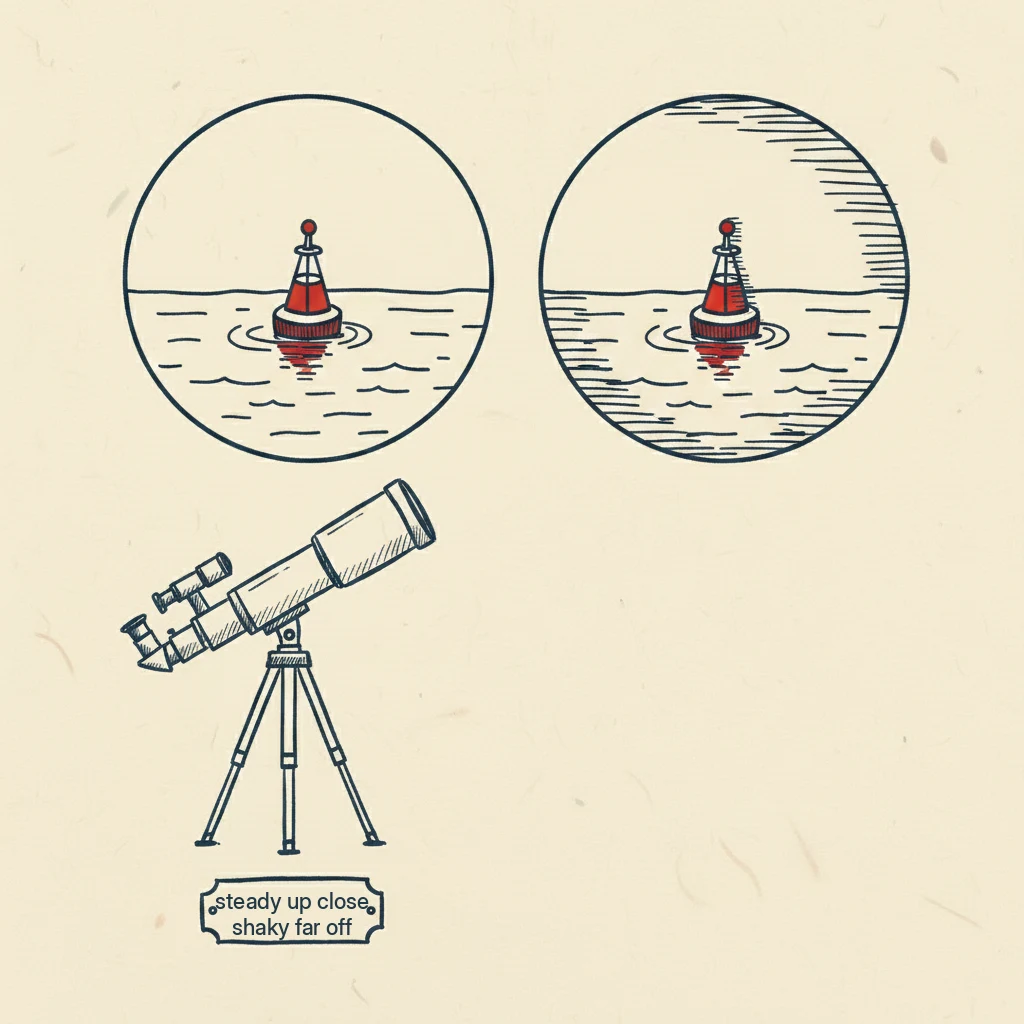
On a boat this runs against every instinct. You’d think more power means seeing better, and on solid ground it often does. But a boat never holds still. Every wave rocks the deck, and a binocular blows up that motion by the same amount it blows up the view. Push to 10x or 12x and the horizon bounces so hard you can’t hold anything long enough to identify it.
At 7x, the shake stays small enough that your eyes and brain can settle on what you’re looking at. Sailors figured this out a long time ago, and the marine specialists build their flagships at 7x50, made to hold a steady image even in rough seas. So when you see “7x50” on a marine pair, read the 7 as a deliberate choice for the water, not a cheap corner cut. It’s the one place in optics where buying less power is buying a better view.
What 7x50 and “marine” actually mean
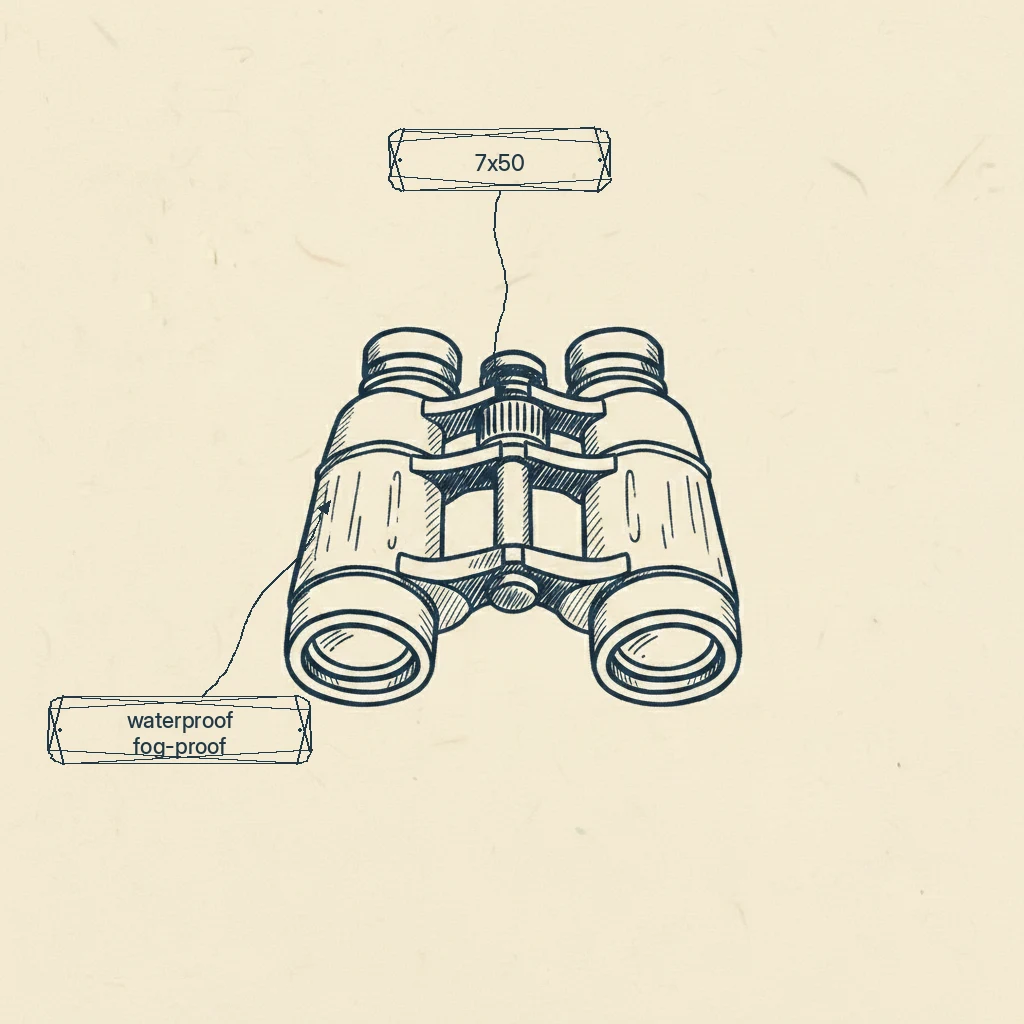
The two numbers are simple. The 7 is the power, so things look seven times closer. The 50 is the front-lens width in millimeters, and a big 50mm does two jobs on the water: it drinks in light for dim dawns and dusks, and it widens the field so you can find a distant boat or bird without hunting.
The word “marine” adds a few rugged requirements. The pair must be fully waterproof, because spray and rain and the occasional dunking come with the territory. It must be fog-proof, which means it’s filled with a dry gas like nitrogen or argon so it won’t mist up inside when you move between cool air and a warm cabin. And it should wear a coat of rubber armor for grip and for surviving a knock against the rail. Those three things, waterproof, fog-proof, and armored, are the non-negotiables.
The extras: compass and better prisms
Two upgrades separate a casual boater’s pair from a bluewater sailor’s. The first is a built-in compass, sometimes with a ranging scale, which floats in the view so you can take a bearing while you look. It’s genuinely useful for offshore navigation and genuinely unnecessary for an afternoon on the lake. Don’t let anyone upsell you the compass if you’ll never take a bearing.
The second is the glass inside. Better marine pairs use what’s called BAK-4 porro prisms, which give a brighter image with better depth than the cheaper BK-7 kind. On the water, where light bounces off everything, that brightness is worth checking for. Fully multi-coated optics help too, cutting the glare off the surface.
The boating shelf
All researched, none tested by anyone here, and you’ll find that said plainly on the About page. Prices are rounded to what I’m seeing as I write this.
- Vortex Triumph HD 10x42, about $98. A rugged, waterproof sub-$100 pair. Note the 10x is above the marine ideal, so it’s better on calm water than in offshore chop, but it’s a lot of durability for the money.
- Steiner Marine 7x50, about $375. The classic 7x50 marine standard, and the one I’d point most boaters at.
- Hawke Endurance ED Marine 7x32, about $340, a lighter, sharper marine pair with premium glass.
- Steiner Navigator 7x30 open-hinge, about $500, a compact marine build for easy one-hand carry on deck.
If you want a compass for real navigation, the Steiner Commander 7x50 is the top of this class, and there are budget 7x50 pairs with a compass built in if you just want the feature cheaply. Match the spend to how far offshore you actually go.
The traps on the water
Three ways this goes wrong. The first is over-powering it: a 10x or 12x pair looks impressive on paper and betrays you the moment the deck rocks. Stick near 7x for anything but flat water.
The second is buying a pair that isn’t truly waterproof and fog-proof. A “water-resistant” pair fails in real spray, and a non-gas-filled one fogs on the inside the first cool morning, where you can’t wipe it. Demand both, plainly stated. The third is paying for a compass and rangefinder you’ll never use. Those are offshore tools. If your boating is a cooler and a fishing rod on a calm bay, skip them and put the money into waterproofing and good glass.
Questions people actually ask
What magnification binoculars are best for a boat?
7x, almost always. A boat is always moving, and binoculars magnify that motion as much as the view, so a 10x or 12x pair shakes too much to be useful offshore. The 7x50 marine standard gives you a steady image, plenty of light, and a wide field. Higher power only makes sense on flat, calm water.
Do boating binoculars really need to be waterproof?
Yes, without compromise. Spray, rain, and humidity are constant on the water, and a pair that isn’t sealed will flood or fog and be ruined. Look for two words together: waterproof and fog-proof. Fog-proof means it’s gas-filled so it won’t mist inside when the temperature changes. Both matter, and both are standard on real marine binoculars.
Do I need the compass model?
Only if you navigate. A built-in compass helps a sailor take bearings offshore, and it’s dead weight and extra cost for someone fishing a calm bay for the afternoon. It’s a genuine tool, not a gimmick, but it’s an offshore tool. For most recreational boating, skip it and buy a plain, well-sealed 7x50 instead.

What I’d keep on the boat
A 7x50 marine pair, waterproof and fog-proof, rubber-armored, riding in a spot where a splash won’t matter. Around $375 buys the classic Steiner, and about $98 buys a rugged starter if you stay on calm water. Skip the compass unless you actually take bearings.
A few things you’re probably also wondering:
- Heading out on a cruise and want one do-it-all pair? See best binoculars for alaska cruise.
- Going whale watching from a boat? See binoculars for whale watching.
- Wear glasses on the water? See binoculars for glasses wearers.
Ray Ostrander
Ray spent three decades explaining the sky to twelve-year-olds and their parents, and every January, hearing which Christmas telescopes ended up in the closet. He doesn't own a wall of gear and won't pretend to. He reads everything, tells you what owners agree on, and flags what's just his judgment. His goal is simple: no more January closets.