
Binoculars for Concerts: Match the Power to the Venue
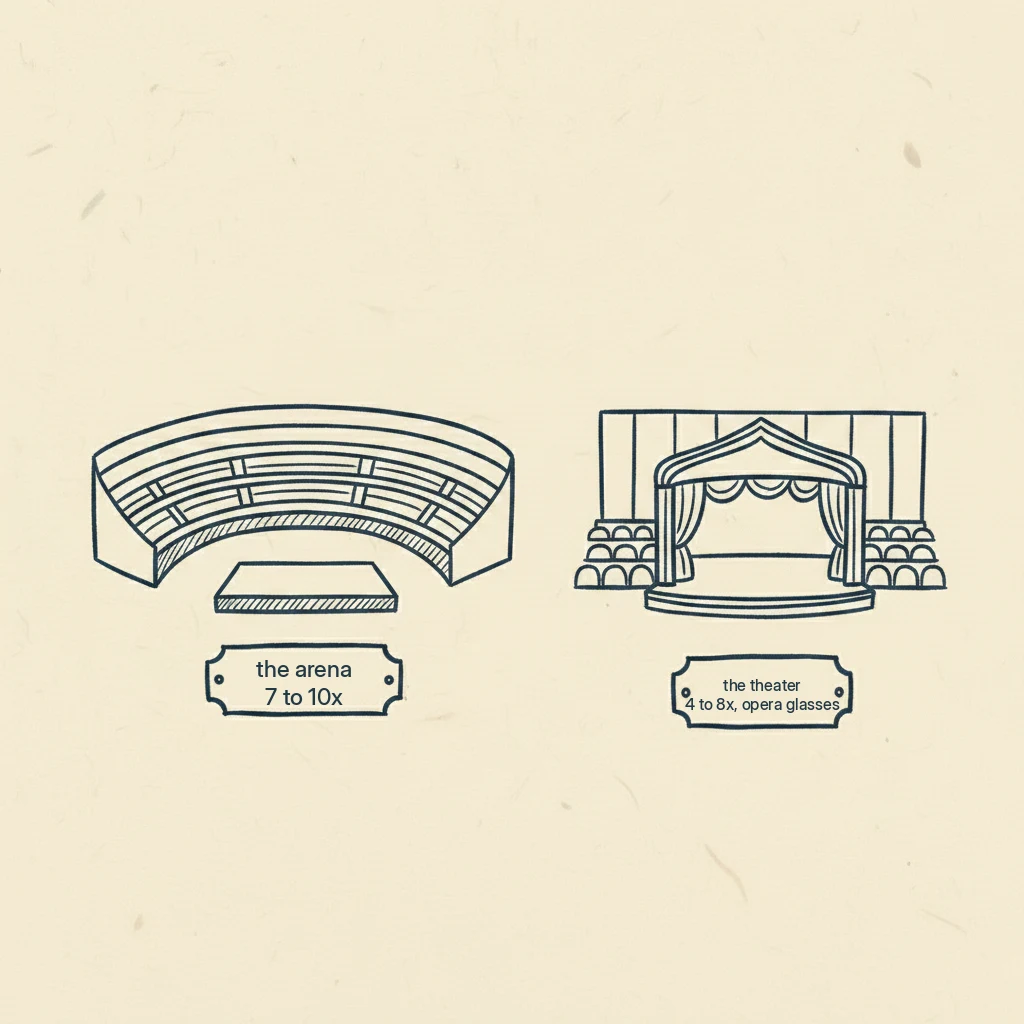
For an outdoor arena concert use 7 to 10x. For indoor theater or opera use a compact 4 to 8x, which is what opera glasses really are. A Celestron Outland X 8x25 at about $70 covers most of both.
 Ray Ostrander · Updated July 24, 2026 · how I decide
If you buy through a link here, the site earns a little. It's never why anything gets picked.
The right pair depends on one thing: where you’re sitting and what kind of room it is. For an outdoor arena concert, you want 7 to 10x. For an indoor theater or opera, you want a compact 4 to 8x, which is exactly what “opera glasses” are. A Celestron Outland X 8x25 at about $70 covers most of both. And whichever you buy, prize a wide field of view and light weight over raw power, because you’ll be holding it for hours.
This is the easygoing end of the shelf, so don’t overthink it. You’re picking a pair that lets you catch a singer’s face from the cheap seats without your arms giving out by the encore.
What's on this page
First question: arena or theater?
The one-answer listicles lead people wrong here, because the two settings need different power. An outdoor arena or amphitheater puts the stage a long way off, so 7 to 10x earns its keep, with 8 to 10x being the comfortable sweet spot: close enough to read a face, steady enough to hold without the view swimming.
An indoor theater, opera house, or small hall is a different animal. The stage is closer, the room is dim, and too much power actually hurts you: you end up staring at one elbow and panning constantly to follow the scene. There, 4 to 8x is plenty, and it keeps the whole stage in front of you. If you go to both kinds of shows, a single compact 8x is the honest one-pair compromise. It’s a touch strong for a tiny theater and a touch light for the back of a stadium, and it’s fine at both.
What “opera glasses” actually are
The fancy name trips people up, so let me demystify it. “Opera glasses” are just small, low-power binoculars, usually 3 to 5x, made for the short throw of an indoor theater. That’s the whole secret. They aren’t a different technology, and the ornate gold-handled ones you picture are mostly styling.
Which leads to the one caution in this category. Some things sold as opera glasses are decoration first and optics second: pretty to hold, weak to look through. Buy for the spec, not the look. A plain 4 to 8x compact with good glass will beat a lorgnette-styled ornament every time, and it’ll cost less.
Wide field beats power on a stage
If I could get you to fixate on one spec here, it wouldn’t be magnification. It’s field of view. A wide field is close to non-negotiable for watching a stage. With a narrow, tunnel-vision pair, you spend the whole show sweeping left and right trying to keep the performer centered, and you miss the very thing you came to see. Look for anything that advertises a wide-angle design.
Weight is the other quiet spec. You’ll hold these up, on and off, for two hours. A heavy pair turns into a workout by intermission, so lightweight is a real feature at a concert, not a luxury. Small and light usually beats big and bright once you’re indoors.
The concert-and-theater shelf
All researched, none tested by anyone here, and you’ll find that said plainly on the About page. Prices are rounded to what I’m seeing as I write this.
- Celestron Outland X 8x25, about $70. The compact 8x that reasonably covers both an arena and a theater. For most showgoers, one pair, done.
- Celestron TrailSeeker 10x32, about $190. The extra reach for a big outdoor arena, still light enough to carry.
- Celestron Nature DX 8x42, about $160 to $180. A brighter 8x for dim rooms, if you don’t mind a slightly larger body.
If you only ever go to the theater, a true low-power opera glass around 4x does the close work nicely. If you want the best small glass money can buy for frequent shows, the premium compacts from Zeiss and Leica are the top of this class. And for a once-a-year show, an honest sub-$40 compact is plenty. Buy cheap enough that losing it wouldn’t sting.
The traps: wrong power, tunnel vision, and pretty-but-blind
Three ways this goes sideways. The first is mismatched power: a 10x arena pair in a small theater gives you a shaky tunnel, because higher power both magnifies your hand’s motion and narrows the field, and a 4x opera glass at a stadium show can’t reach the stage at all. Match the power to the room.
The second is tunnel vision from a narrow field, which turns the whole night into panning. Demand the wide-angle spec. The third is the decoration trap: buying “opera glasses” for the gold trim and getting cloudy optics. None of these cost much to avoid once someone tells you they exist, which is the entire point of this page.
Questions people actually ask
What magnification binoculars are best for concerts?
For an outdoor arena, 8 to 10x is the sweet spot: enough to read a performer’s face without excessive shake. For an indoor theater or opera, drop to 4 to 8x so you keep the whole stage in view. If you attend both, a single compact 8x is the sensible one-pair answer, slightly strong indoors and slightly light outdoors, and fine at both.
What are opera glasses, and do I need special ones?
Opera glasses are simply small, low-power binoculars, usually 3 to 5x, built for the short distances of an indoor theater. You don’t need anything ornate. A plain 4 to 8x compact with a wide field and clear glass does the job better than a decorative pair, and often for less money. Buy for the optics, not the gold handle.
Are compact binoculars good enough for a concert?
Yes, and they’re usually the right call. A compact 8x25 is light enough to hold all night, small enough to slip in a bag, and powerful enough to bring a distant stage close. You only need a larger pair if you’re chasing a bit more brightness in a very dim room. For most concerts and shows, compact is the smart buy.
What I’d bring to the show
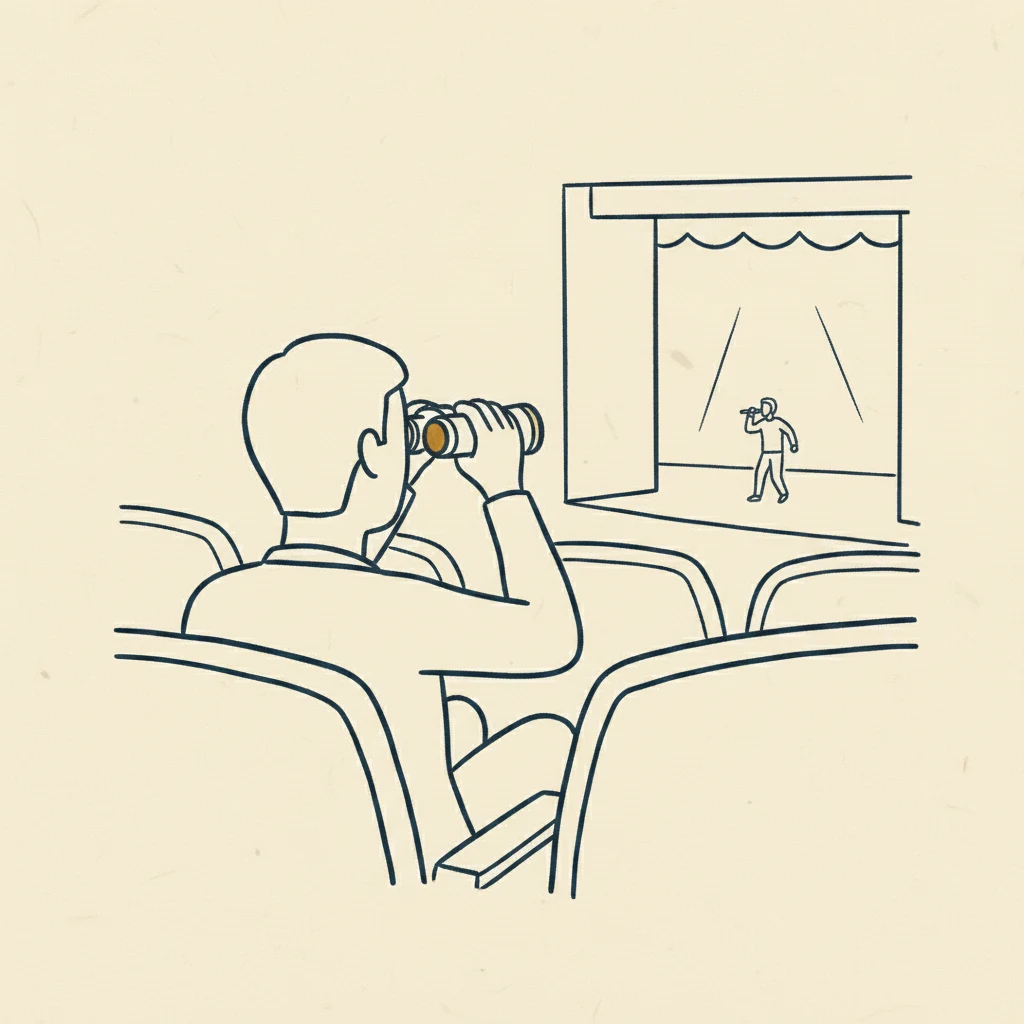
For an arena, an 8x25 or a 10x32 compact, around $70 to $190. For a theater, a light 4 to 8x, or the same 8x25 if I only want to own one pair. Wide field, light weight, and I stop worrying about the magnification number.
A few things you’re probably also wondering:
- Want the all-purpose pair for trips and nature too? See best binoculars for alaska cruise.
- Heading to a game instead of a show? See binoculars for sporting events.
- Wear glasses at the show? See binoculars for glasses wearers.
Ray Ostrander
Ray spent three decades explaining the sky to twelve-year-olds and their parents, and every January, hearing which Christmas telescopes ended up in the closet. He doesn't own a wall of gear and won't pretend to. He reads everything, tells you what owners agree on, and flags what's just his judgment. His goal is simple: no more January closets.