
Microscope for Cards: What It Can Show You, and What It Can't
A microscope can't tell you what grade a card will get, because the graders assess most cards with the naked eye, not magnification. What a microscope is genuinely good for is seeing what's actually on your card, like telling a speck of dirt from missing paint. For grading expectations, a 10x loupe and a good lamp beat a $200 scope.
 Ray Ostrander · Updated July 24, 2026 · how I decide
If you buy through a link here, the site earns a little. It's never why anything gets picked.
Let me save you some money before you spend it. If you’re buying a microscope to figure out what grade your card will get, hold off, because a microscope can’t tell you that. The people who grade cards for a living assess most cards with the naked eye, not under magnification. So a scope, no matter how many times it magnifies, isn’t a grade-prediction tool, and the shelf is quietly selling it to you as one. What a microscope genuinely is good for is seeing what’s actually on your card, like telling whether that mark in the corner is a speck of dirt or a spot of missing paint. That’s a real and good reason to own one. For getting a sense of how your card will grade, though, the honest tools are a 10x loupe and a good lamp, and together they cost a fraction of a digital microscope.
What's on this page
- The finding that changes everything: the graders use their eyes
- Here's what's actually happening: you're buying a prediction tool that doesn't predict
- What a microscope IS worth owning for
- What to actually buy
- The one thing this page won't do
- Questions people actually ask
- Where I'd start with a card and a question
The finding that changes everything: the graders use their eyes
This comes straight from the grading world’s own community. On the forum run by PSA’s parent company, collectors discussing exactly this question kept landing on the same answer, and one summed it up: “Quality lighting is all you need.” He pointed to the president of PSA at the time, Joe Orlando, who is quoted in that thread as writing that the vast majority of cards are graded with the naked eye.
Let me be careful and precise about that, because it matters and I won’t overstate it. What I can tell you for certain is that a poster on PSA’s own community forum quotes Orlando saying most cards are graded by eye, and nobody in that grading-savvy thread argues with it. I haven’t read the original article myself, so I’ll attribute it exactly as I found it, quoted on the collectors’ forum, rather than putting words directly in the company’s mouth.
It’s worth knowing this isn’t a card-only quirk, either. In the coin world, the American Numismatic Association tells collectors the same thing: look at the coin with your naked eye first to get an impression, and don’t reach for a magnifier if it doesn’t impress you to begin with. Eye before glass is how the grading trades actually work. Different hobby, same instinct.
Here’s what’s actually happening: you’re buying a prediction tool that doesn’t predict
Sit with what that means. The card shelf is full of digital microscopes, 50x, 200x, 1200x, sold to collectors who want to know what grade they’ll get. But the graders themselves aren’t grading by magnification. So the tool is being sold for a job the industry doesn’t do with it. You can put your card under 1200x and study it for an hour, and you’ll have learned a great deal about the card, and almost nothing about the grade it will receive, because that’s not how the grade is decided.
There’s a sharper version of this that a knowledgeable collector raised in that same thread, and it’s worth hearing even though it’s one person’s view rather than a settled law. He warned that magnification tends to conceal slight bends and similar issues, the very things that move a grade often, while showing you corner fraying and paper loss, things that move a grade far less. If he’s right, and he’s making the point inside a grading community without anyone rebutting him, then the scope can actually make you confidently wrong: fretting over a frayed corner that barely matters while missing the subtle bend that does. That’s worse than not owning it.
I’ll add that the collectors in that thread don’t all love how grading works. One said flatly, “If you can only tell a ‘9’ from a ‘10’ with magnification, the entire grading thing is a joke,” and another partly agreed while noting that’s simply the reality with corners. I’m not here to settle whether the system is fair. I’m just telling you how it actually works, so you buy the right tool for what you’re really trying to do.
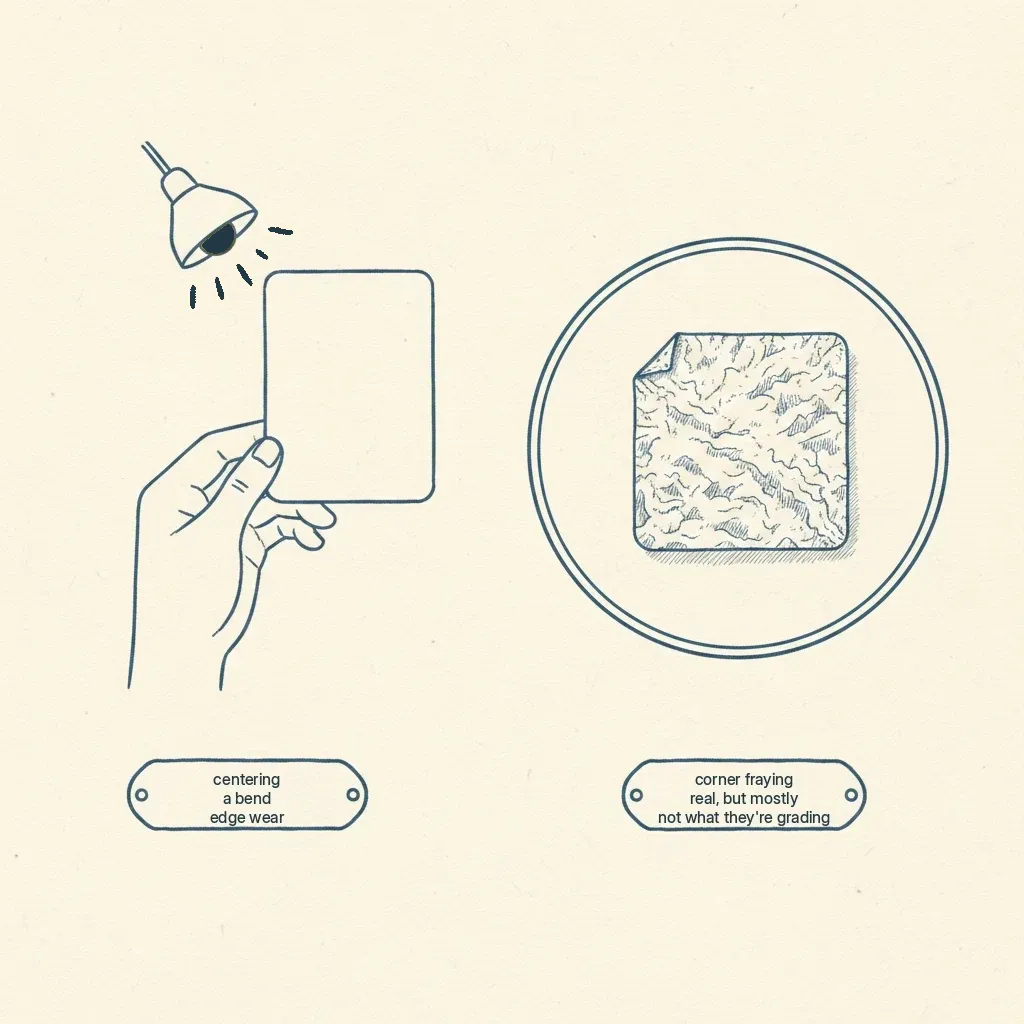
What a microscope IS worth owning for
Now the fair other side, because I’m genuinely not against these scopes. There’s a real, permanent reason to own one, and it isn’t grading.
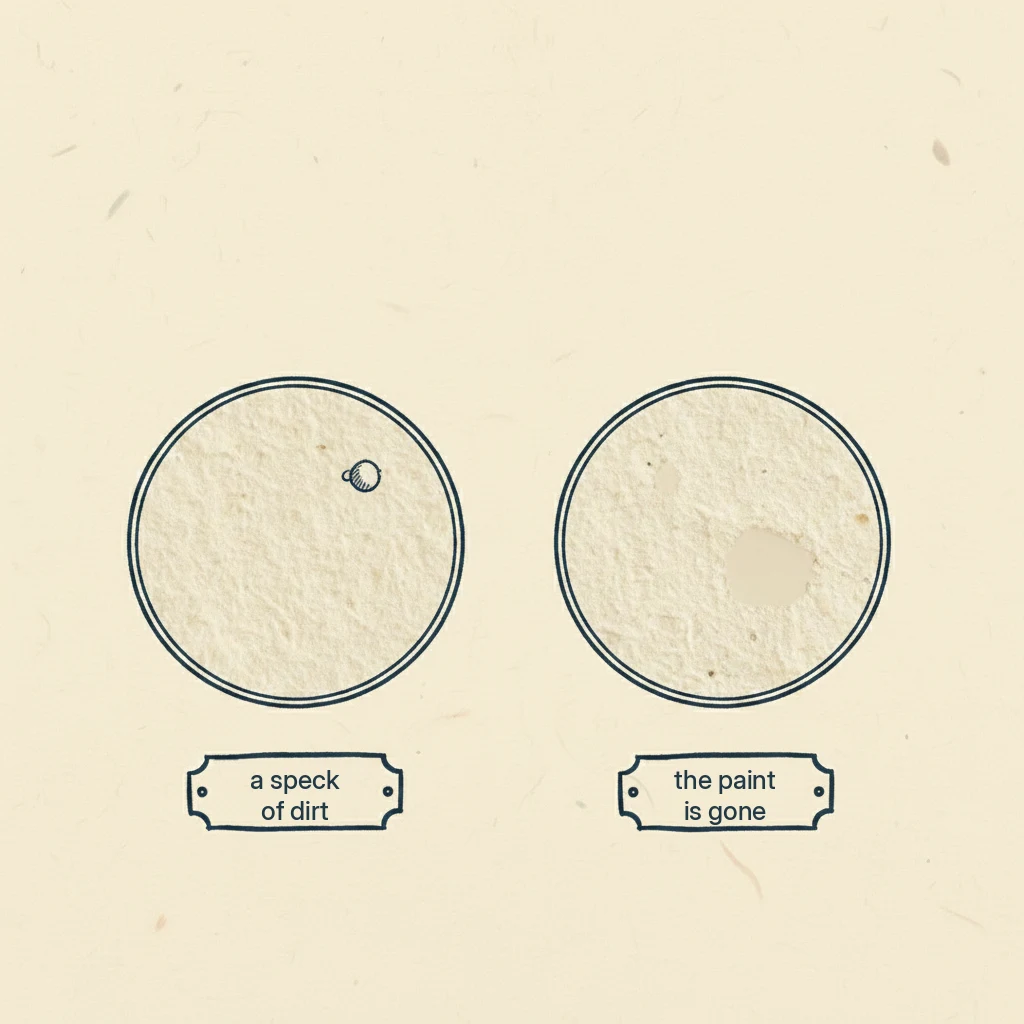
A card-care specialist puts it well: under magnification, “What might appear to be a speck of dirt could actually be missing paint.” That’s the whole honest case. A microscope lets you see what’s truly on the surface, a dog-eared corner up close, whether an edge has lost color, whether that little fleck is dirt you could gently clear or paint that’s simply gone. That’s real knowledge about your own card, it’s satisfying, and for a serious collector it’s worth having.
So here’s the clean way to think about it. Use magnification to see, not to predict. To learn what’s physically on your card, a microscope earns its place. To guess your grade, it doesn’t, and lighting and your own eye are the better tools. Those are two different purchases, and the shelf blurs them together on purpose. Well, I won’t say on purpose, since I can’t read a seller’s mind, but the two claims sit side by side on these product pages and only one of them holds up.
What to actually buy
For the grading-expectation question, which is what most people are really asking, the honest answer is cheap. Start with a 10x loupe, the same little pocket lens the collector in that forum thread bought, which runs about $20, and a good lamp. As that thread put it, quality lighting is most of what you need. The most useful thing on this whole page might be the least exciting: a decent angled light source, so you can tip the card under it and let raised bends and surface flaws catch the light.
If you decide you want a microscope to see the card, the digital ones sold for cards are the same class of hardware sold for coins, and they’re priced the same. The screen-based TOMLOV scopes run from about $35 for a pocket model up to around $160 for the big 10-inch ones. Card-specific listings, like the ones branded as trading-card inspection tools, are the same kind of device at roughly the same $100-to-$200 prices, just wearing a card label.
One caution on the numbers. These get advertised at 1200x and 1500x, and a card is a flat piece of cardboard. It isn’t obvious what 1500x is even for on a flat surface, and the honest guidance on cheap scopes is to be wary of anything waving 1600x or 2000x, because that’s usually poor glass reaching for a big number. There’s also a wrinkle I won’t pretend to fully explain: these screen scopes measure their magnification onto a monitor, which isn’t the same unit as looking through an eyepiece, and I don’t have a solid source for exactly how those translate, so I’ll flag the discrepancy rather than guess at it.
I’ll be plain about one more thing, because it’s the site’s whole way of working. The honest recommendation on this page, a $20 loupe and a good lamp, earns this site far less than pointing you at a $200 microscope would. I’m telling you the cheap thing anyway, because that’s where the evidence lands. That’s the deal here, always.
The one thing this page won’t do
A firm line, and I mean it. A card can be worth real money, so I’m not going to let a magnifier pretend to do jobs it can’t. This page shows you how to see your card. It doesn’t tell you whether the card is authentic, whether it’s been altered or restored, or what grade it will get. You’ll notice some sellers of these scopes advertise exactly those powers, spotting fakes, detecting restoration, verifying authenticity. I’m not repeating those claims, endorsing them, or teaching them, because getting an “it’s genuine” wrong on a valuable card costs someone real money, and a microscope isn’t the thing that answers that question. Seeing and authenticating are different jobs, and I’ll only vouch for the first one.
Questions people actually ask
Can a microscope tell me what grade my card will get?
No. The graders assess most cards with the naked eye and good lighting, not under magnification, as discussed openly in PSA’s own collector community. A microscope shows you fine surface detail, but it doesn’t predict a grade, and one experienced collector even argues that magnification can hide the bends that actually move grades. For grading expectations, a loupe and a lamp serve you better.
Do I need a microscope to inspect trading cards?
Not for grading, but it’s genuinely useful for seeing your card. Under magnification you can tell a speck of dirt from missing paint, spot edge color loss, and study corner wear up close. That’s a real reason to own one. Just don’t buy it expecting it to tell you a grade, because that’s a job the graders themselves do with their eyes.
What magnification do I need for cards?
Less than the shelf implies. A 10x loupe covers the practical inspection most collectors want. The digital scopes advertise 1200x or 1500x, but a card is a flat surface, and it’s not clear those big numbers buy you anything useful on cardboard. The cheap guidance is to be skeptical of any scope leaning hard on a huge magnification figure.
Is a loupe or a microscope better for cards?
For most people, a 10x loupe and a good lamp, which is what the graders’ own community keeps recommending and what the collector in that thread actually bought. A microscope is worth it only if you specifically want to see fine surface detail, like distinguishing dirt from missing paint, rather than to estimate a grade. Match the tool to which of those you’re actually doing.
Where I’d start with a card and a question
So here’s where I’d leave it, for the careful collector standing at the counter with a card and a worry. If your question is “what will this grade,” buy the $20 loupe and a good lamp, not the microscope, because the people who assign grades are using their eyes, and no amount of magnification changes how your card gets scored. If your question is “what is actually going on with this surface,” then a microscope is a fine and satisfying thing to own, bought honestly, for looking rather than for fortune-telling. Just keep those two questions separate in your head, because the shelf works hard to blur them, and the cheaper answer is usually the right one.
The same instrument shows up across this collector counter: a microscope for coins is the hub for the whole loupe-versus-scope question, a magnifying glass for coins prices the loupe shelf that’s the real recommendation here, and a microscope for rocks covers the very different tool a solid, three-dimensional specimen needs. And if a box ever tries to sell you on a giant magnification number, the number on the box explains why the pros reach for less, not more.
Ray Ostrander
Ray spent three decades explaining the sky to twelve-year-olds and their parents, and every January, hearing which Christmas telescopes ended up in the closet. He doesn't own a wall of gear and won't pretend to. He reads everything, tells you what owners agree on, and flags what's just his judgment. His goal is simple: no more January closets.