
Compact Binoculars for Bird Watching: What the Small Pair Gives Up, and When It Matters
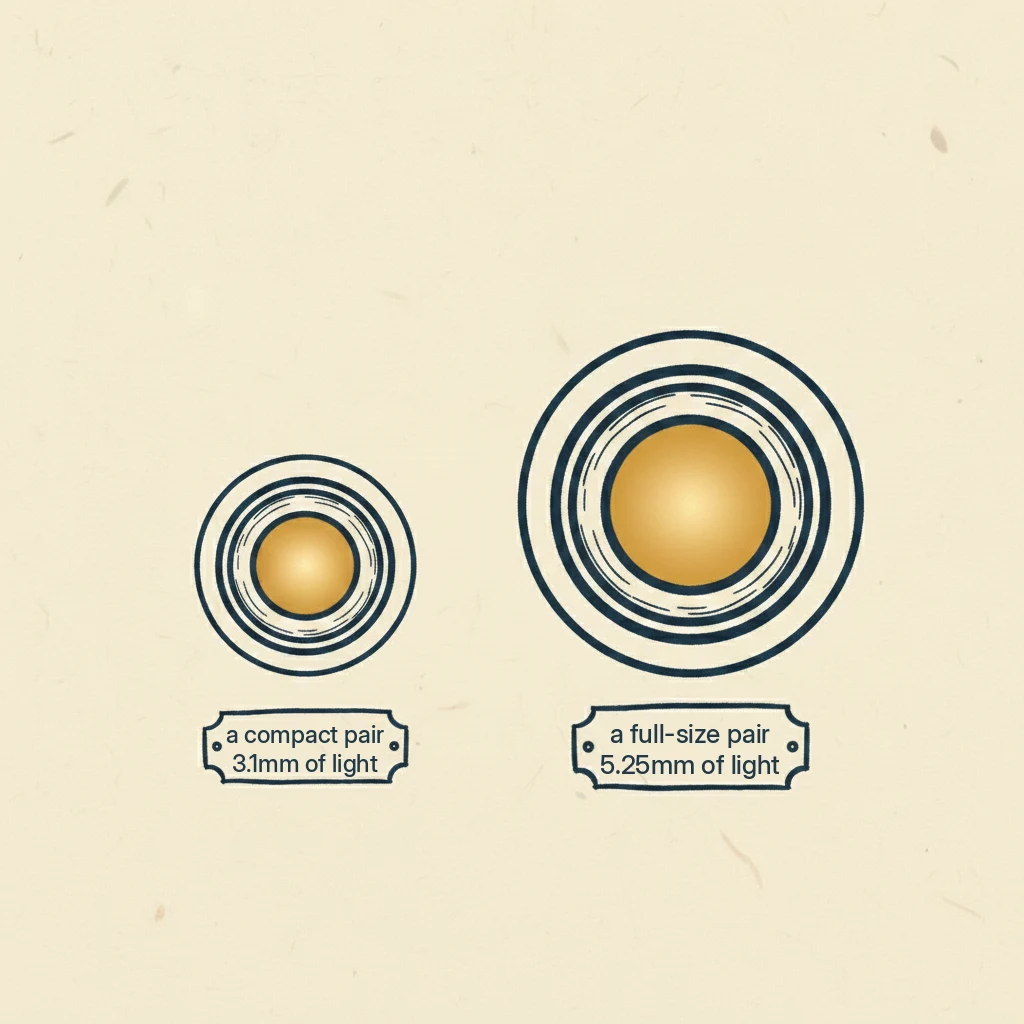
A compact 8x25 is a real birding binocular, and the right buy if the alternative is leaving the big pair at home. What it trades is light: a 3.1mm exit pupil versus 5.25mm, and that gap shows at dawn and dusk. Buy the compact for carrying, a 42mm for seeing.
 Ray Ostrander · Updated July 24, 2026 · how I decide
If you buy through a link here, the site earns a little. It's never why anything gets picked.
A compact 8x25 is a real birding binocular, and it’s the right choice if the honest alternative is leaving the big pair at home. What it gives up is light. Its exit pupil, the little circle of brightness that reaches your eye, is about 3.1mm, against 5.25mm on a full-size 8x42, and that gap shows up at dawn, dusk, and under dense tree cover. That happens to be when birds are most active. So the rule is simple: buy the compact for carrying, and a 42mm for seeing.
I’m not going to open by telling you that you actually want a big pair. You searched for compact, which means you’ve already decided you want something small enough to bring along, and that’s a defensible, evidence-backed instinct. So let me do the useful thing instead: tell you exactly what you’re trading, in ounces and millimeters, and let you make the call.
What's on this page
The trade is light, and only light
Start with the good news, because there’s more of it than the spec forums admit. On magnification and field of view, the compact isn’t compromised at all. Every expert I read, Audubon included, recommends 8x for birding, precisely because the lower power gives you a wider view and less shake. A compact 8x has exactly that. The institution that guards the front door of birding has already endorsed most of what the compact buyer wants.
So the compact’s problem was never the magnification and never the field of view. It’s one thing, and here’s what’s actually happening. The brightness a binocular hands your eye is set by a number called the exit pupil, and it’s just the lens width divided by the power. On an 8x25, that’s 25 divided by 8, about 3.1mm. On an 8x42, it’s 42 divided by 8, about 5.25mm. You can do that arithmetic yourself on any binocular you’re looking at, which is the best kind of fact. The bigger circle is a brighter image, and it’s also more forgiving if your eye isn’t perfectly centered.
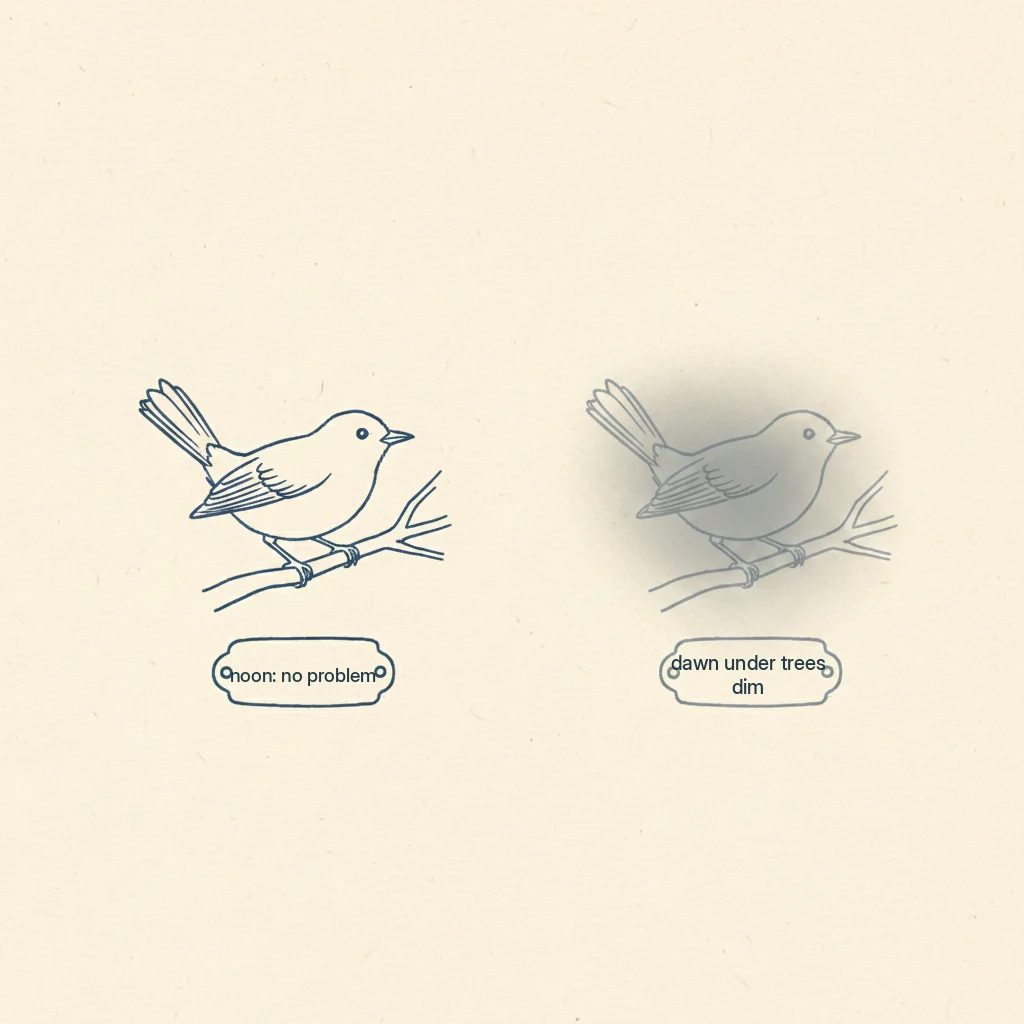
In broad daylight, that difference barely registers; both circles are more light than your eye needs. The gap opens up in dim conditions: at dawn, at dusk, and under a thick canopy, where a larger exit pupil visibly helps.
Why the dim hours are exactly the birding hours
Here’s the part that turns a spec into a real decision, and I want to be careful to keep two true things separate instead of gluing them together.
First fact: birds are most active early in the morning. Researchers at Cornell have documented that many species sing far more at dawn than at other times, and any birder will tell you the early hour is the good one. Second fact, a completely different one: early morning under trees is dim, and dim is exactly where a compact’s small exit pupil struggles.
I’m deliberately not going to tell you the birds are active because of the low light, because that isn’t true, the same Cornell work found light levels didn’t significantly drive when birds sang; social factors like territory and feeding did. It’s two independent facts that happen to stack. The birds are out early. The light is poor early. So the compact is at its dimmest right when you most want to be looking. That’s not a reason to avoid a compact. It’s a reason to know what you’re carrying and to keep your expectations honest at 6am.
Five ounces, and what they buy
Now the other side of the ledger, the one that vindicates the small pair. The whole reason to go compact is that you’ll actually have it with you, and the most common birding failure I know of isn’t a dim view. It’s owning a lovely big pair and leaving it on a shelf because it’s heavy to haul. A compact that rides in a jacket pocket beats a superb 42mm sitting at home, every single time. The instrument you carry is the one that works.
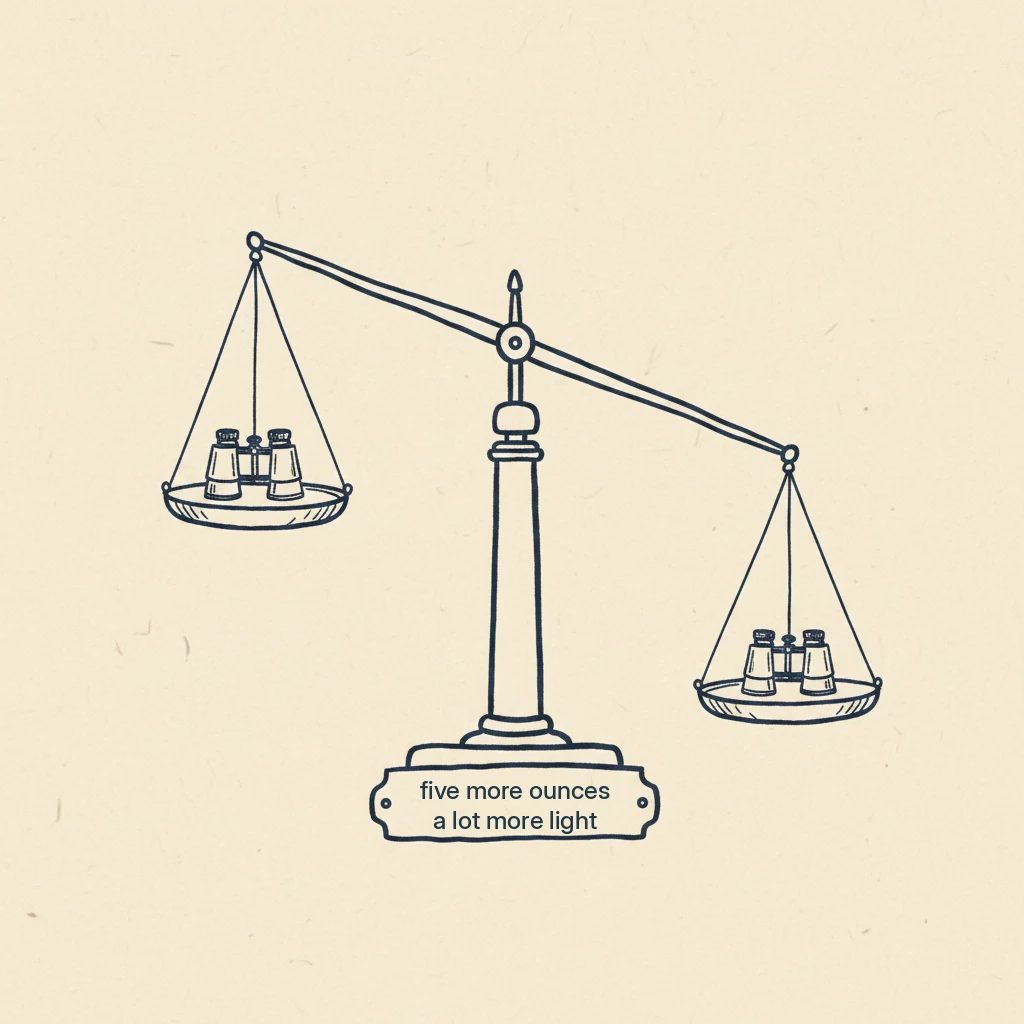
The weights make the trade concrete. Reviewer figures put a compact 8x25 around 10 ounces, and a slightly larger 8x32 around 15. So stepping up from a 25mm to a 32mm objective costs you roughly five ounces. That’s the entire decision in two numbers: about five ounces buys you a meaningful jump in light. One caveat on honesty, because these weight figures and the prices below come from different sources and different models, I’m not going to pretend any single pair’s exact ounces-and-dollars are matched.
The compact’s quiet win: finding the bird
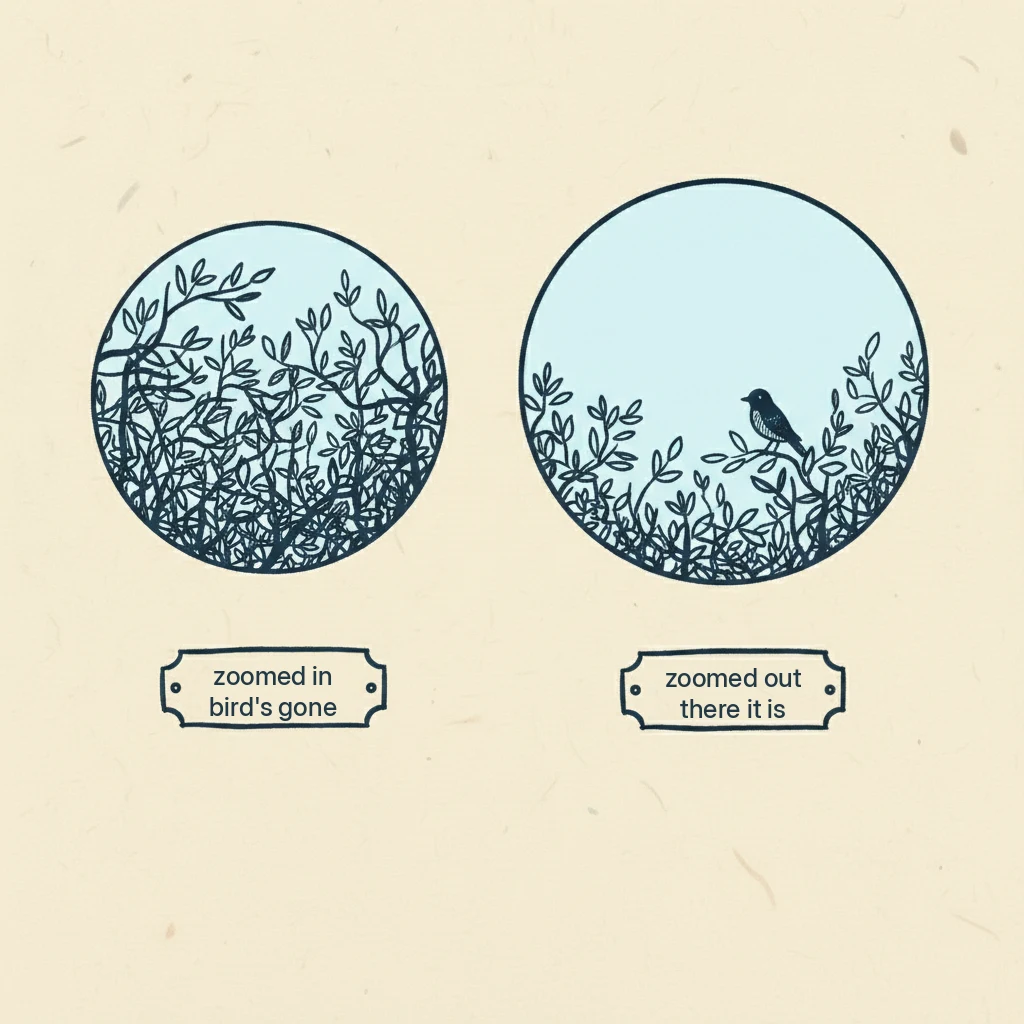
There’s an advantage to the small 8x that the shelf never mentions, and it might matter more to a new birder than brightness does. A beginner’s real frustration usually isn’t seeing the bird dimly. It’s never finding the bird at all, sweeping a bush and catching nothing but leaves. Lower magnification gives you a wider view with more surrounding background, which makes it far easier to know where you’re pointed and to land on the bird in the first place. On that axis, the axis that decides whether your morning is fun or maddening, the compact 8x isn’t a compromise at all. It’s genuinely good.
The shelf, and the awkward best-seller
All researched, none of it looked through by anyone here, which the About page says plainly. Prices are rounded to what I’m seeing as I write this. The nice part of this door is that Audubon itself has publicly recommended and priced compacts, which is about the best endorsement a category can get.
- THINKPEAK 8x21, about $40. Audubon’s youngest-starter pick. The whole decision here costs less than a couple of restaurant lunches.
- Celestron Outland X 8x25, about $65 (the maker’s sticker says closer to $70). A solid, cheap, real compact.
- Nocs Standard Issue 8x25, about $95. Audubon-listed, a step up in glass.
- Nikon PROSTAFF P3 8x30, about $130. A touch larger objective, a touch more light, still pocketable.
And here’s the honest step-up if the dim-hours problem worries you: a full-size Celestron Nature DX 8x42 runs about $160, weighs perhaps five ounces more, and hands you that 5.25mm exit pupil plus a generous 17.5mm of eye relief. That’s the trade, fully priced, in one line.
Now the awkward one, because I’d rather tell you than hide it. The single best-selling “compact” for birds on the big marketplace is an Occer 12x25 at about $36, with tens of thousands of ratings. It is, by a wide margin, what people actually buy. But it’s 12x, above what every expert on this page recommends, and 25 divided by 12 is an exit pupil of about 2.08mm, which is genuinely dim and harder to hold steady. I’m not going to tell you not to buy it, plenty of happy people did. I’m going to give you the two numbers, 12x and 2.08mm, and let you decide with your eyes open. If steadiness and low-light brightness matter to you, an 8x25 is the better instrument even though it sells less.
A note for glasses-wearers
One personal flag, because I wear thick glasses myself and it’s why I care about this. That small 3.1mm exit pupil is less forgiving of exactly where your eye sits behind the lens, and glasses push your eye farther back. So a glasses-wearer buying a compact is stacking two small disadvantages. It’s not a dealbreaker, but you’ll want to check the eye-relief number carefully, and I walk through that whole issue on binoculars for glasses wearers.
Questions people actually ask
Are compact binoculars good enough for bird watching?
Yes, genuinely, with one honest caveat. On magnification, field of view, and finding the bird, a compact 8x is excellent, and Audubon recommends compacts in the $40 to $95 range. What a compact gives up is light in dim conditions, dawn, dusk, and deep shade. If you mostly bird in daylight or you’d otherwise leave a bigger pair at home, a compact is the right call. If you chase birds at first light, consider a 42mm.
What size compact binoculars are best for birding, 8x25 or 10x25?
An 8x25 for most people. The 8x gives you a wider view that makes birds easier to find and a steadier image, and every birding expert I read tops out at 8x for handheld use. A 10x25 magnifies a little more but shakes more and, with a 2.5mm exit pupil, dims further. Go to 10x only if you specifically need reach and have steady hands.
Compact or full-size binoculars for birds?
Compact if you’ll carry it and daylight is your main time out; full-size if low-light performance matters more than pocketability. The core trade is that a 42mm objective delivers a 5.25mm exit pupil against a compact’s roughly 3.1mm, at a cost of about five ounces. Neither is wrong. The best pair is the one you’ll actually have around your neck when the bird lands.
Is 12x better than 8x for bird watching?
No, for most people it’s worse, even though 12x sells more. Higher magnification shakes more in your hands, narrows your view so birds are harder to find, and on a compact 25mm lens it drops the exit pupil to about 2.08mm, which is dim. The experts are unanimous on 8x for handheld birding. Save the high power for a tripod-mounted scope.
Which pair you’ll actually bring
If you want one pair and you’ll only carry it when it’s small, buy a good 8x25 in the $65 to $95 range and enjoy it in daylight without apology. If you know you’ll be out at dawn chasing warblers under trees, spend about $160 on an 8x42 instead and accept the extra few ounces. Either way, buy 8x, not 12x, and pick the pair by the honest question of which one you’ll actually bring.
A few things you’re probably also wondering:
- Wondering about a one-eyed option instead? See monocular for bird watching.
- Care most about weight on the trail? See binoculars for hiking.
- Buying for a kid? See binoculars for kids.
- Want the best value overall, compact or not? See best binoculars for the money.
- Comparing a whole trip’s worth of options? Start at best binoculars for alaska cruise.
Ray Ostrander
Ray spent three decades explaining the sky to twelve-year-olds and their parents, and every January, hearing which Christmas telescopes ended up in the closet. He doesn't own a wall of gear and won't pretend to. He reads everything, tells you what owners agree on, and flags what's just his judgment. His goal is simple: no more January closets.